 Bradenton
 Why Siding Repair in Whitfield Estates Takes Local Knowledge
Whitfield Estates is one of the more established neighborhoods on Bradenton's side of Sarasota Bay — mature tree canopy, a mix of home ages, and lots that sit close enough to the water to feel it in the air every day. That combination creates a specific set of siding problems that a contractor working mostly newer inland subdivisions doesn't see as often: shaded sides that stay damp longer than they should, salt-laden air working on fasteners and trim year-round, and siding that's had to survive Florida's toughest conditions for years, sometimes decades, before anyone calls about a repair.
A good repair job here starts with understanding why a specific board or section failed, not just patching what's visibly damaged. This page covers what actually causes siding problems in Whitfield Estates, how we diagnose and scope a repair correctly, and why hiring a crew that already knows this neighborhood's conditions matters more than it might in a newer, more uniform subdivision.
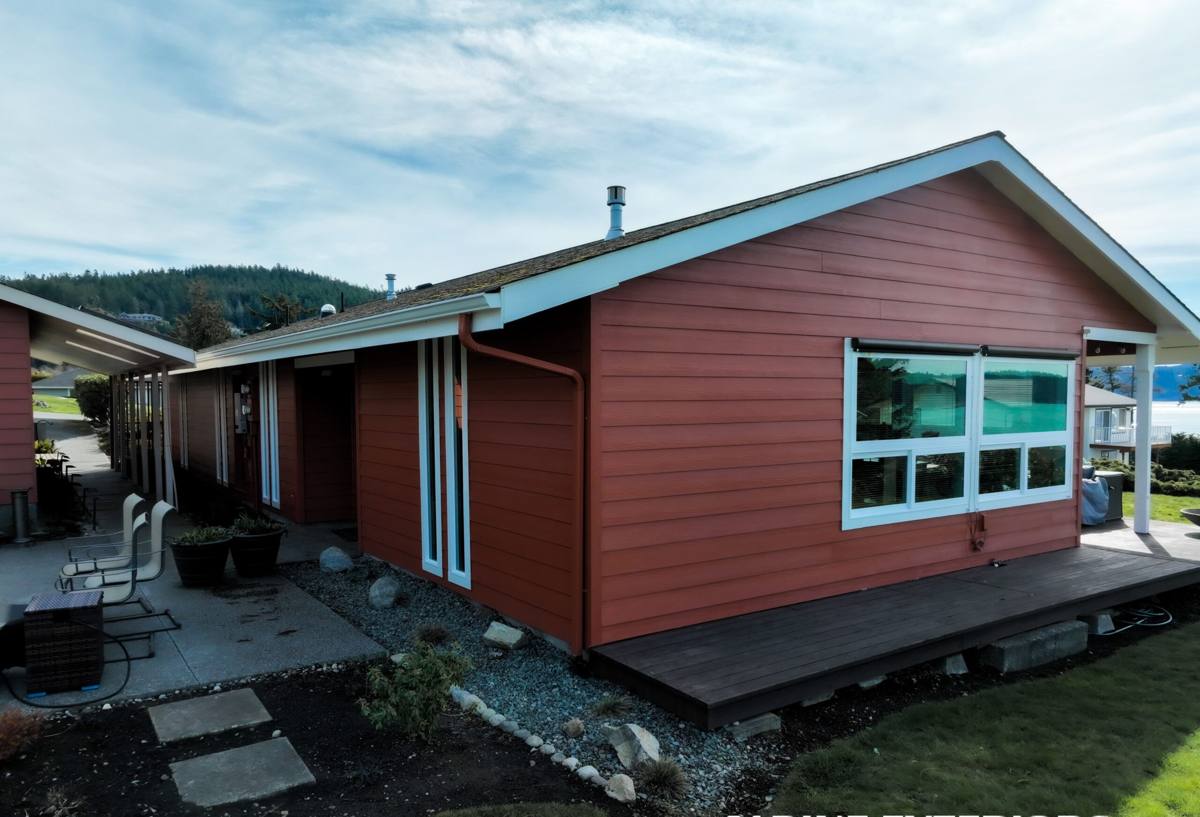
What Manatee County's Climate Does to Siding Here
Salt Air and Corrosion
Being close to Sarasota Bay means salt-laden air settles on siding, trim, and fasteners continuously — not just during storms. Over years, that accelerates corrosion in nail heads, trim fasteners, and any exposed metal flashing, often well before the corrosion is visible from the ground. On older homes in particular, we regularly find fastener failure as the actual root cause behind siding that looks like it's simply come loose or shifted.
Intense, Year-Round UV
Florida's UV exposure is among the highest in the country, and siding takes that load directly on south- and west-facing walls almost every day of the year. On wood siding, UV breaks down surface fibers and paint film, leading to cracking, checking, and premature failure of the finish. On older or lower-grade materials generally, sun exposure is usually why a wall that's ten years old looks more weathered than one shielded by shade or facing north.
Wind-Driven Rain and Storm Exposure
Hurricane-force wind is a real design condition for this part of the Gulf Coast, and it doesn't just test siding during a named storm — wind-driven rain gets forced under laps, around trim, and into seams that ordinary rainfall never reaches. After storm season, it's common to find lifted courses, compromised caulk joints, or water staining at butt joints that wasn't there the year before, even on siding that otherwise looks intact.
Tree Canopy and Trapped Moisture
Whitfield Estates' mature tree cover is part of what makes the neighborhood distinctive, but it also changes how siding weathers. Shaded walls dry more slowly after rain, humidity sits longer against the siding surface, and leaf debris in gutters or along wall bases holds moisture against the lowest courses. That combination is a common driver of mildew staining, algae growth, and — on wood or engineered wood products — rot that starts at the bottom of a wall and works upward before it's obvious from a distance.
What We Typically Find on Repair Calls in This Neighborhood
Because Whitfield Estates has a mix of home ages, we see a wider range of existing siding materials here than in a newer subdivision built all at once. What we find changes what a repair actually involves.
| Existing Siding | Common Failure Pattern Here | Repair Considerations |
|---|---|---|
| Older wood siding | UV-driven paint failure, rot at shaded or ground-contact areas | Often past the point where patching alone solves the underlying moisture issue |
| Vinyl siding | Wind-lifted or cracked panels, sun-faded and brittle sections | Discontinued colors and profiles make exact panel matches difficult on older installs |
| Older fiber cement (non-ColorPlus) | Field-paint failure, caulk joint breakdown at seams | Usually repairable if the board itself is sound; finish needs attention |
| James Hardie ColorPlus siding | Localized impact damage, occasional fastener or flashing issues | Individual boards can typically be replaced and color-matched without repainting the wall |
Not every home in the neighborhood has the same starting point, which is exactly why we scope each repair on-site rather than quoting from a general assumption about what's on the wall.
Cosmetic Wear vs. Signs That Need Attention Now
Some issues can reasonably wait for routine maintenance. Others are early warning signs of a problem that gets more expensive the longer it sits. A short walk-around can usually tell you which category you're dealing with:
- Surface fading or chalking paint — usually cosmetic, worth monitoring rather than urgent
- Soft or spongy siding when pressed — a sign of moisture damage underneath, not cosmetic
- Visible gaps or separation at butt joints and corners — an entry point for wind-driven rain that should be sealed promptly
- Dark streaking or mildew concentrated on shaded or tree-covered walls — often a moisture and airflow issue, not just a cleaning problem
- Bubbling or peeling paint in a localized area — frequently points to trapped moisture behind the finish
- Rust streaks below nail heads or trim fasteners — a sign that hardware corrosion has already started
- Siding that's visibly bowed, cupped, or pulling away from the wall — a structural sign that shouldn't be deferred
How We Diagnose Before We Recommend a Scope
A repair estimate that's actually useful comes from a real inspection, not a guess based on the visible surface. On a Whitfield Estates home, that typically includes:
- Checking wall sections in shaded and tree-covered areas separately from sun-exposed walls, since they age at different rates
- Probing suspect boards and trim for soft spots that indicate rot or trapped moisture
- Inspecting fasteners and flashing for corrosion, especially on walls facing the bay or most exposed to prevailing wind
- Checking caulk joints, butt joints, and penetrations (vents, hose bibs, light fixtures) for gaps that let water in
- Assessing whether the underlying issue is isolated or a sign of a broader problem across the wall
- Reviewing gutter and drainage performance near the siding, since poor drainage is a repeat cause of localized damage
We walk through what we find plainly — what needs attention now, what can be monitored, and what's purely cosmetic — before recommending any scope of work.
Repair vs. Replace: How That Decision Actually Gets Made
Homeowners often assume any siding issue means the whole wall needs to come off, or the opposite — that a patch will always be the cheaper, equally durable option. Neither assumption holds up consistently. The factors that actually drive this decision:
- How localized the damage is. A handful of damaged boards or a single section is usually a straightforward repair. Damage spread across multiple walls often means the underlying cause needs a broader fix, not board-by-board patching.
- What's causing the damage. If a repair doesn't address the moisture source, poor flashing, or drainage issue behind it, the same problem tends to resurface in the same spot.
- Material availability for a clean match. Vinyl and older siding lines get discontinued; James Hardie's ColorPlus system is factory-finished and widely available, which generally makes matching an existing wall more realistic.
- Age and remaining life of the rest of the siding. Siding nearing the end of its practical life may only have a repair cycle or two left before full replacement is the more sensible investment.
We'll give a straight answer on which category a given wall falls into, including when a full re-side makes more sense than chasing repairs — rather than defaulting to whichever scope is larger.
What a Correct Repair Involves
Matching Material and Finish
On homes already sided in James Hardie ColorPlus product, individual boards can typically be pulled and replaced with a factory-matched color, since ColorPlus is a baked-on finish designed for exactly this kind of spot repair without repainting the whole wall. On other materials, we're upfront if an exact match isn't realistically available before starting the work, not after.
Correct Flashing and Sealant Detail
A repair that replaces damaged siding without correcting the flashing or sealant detail behind it is treating a symptom, not the cause. We address the water management detail — not just the visible board — so the same failure doesn't show up again in the same spot after the next storm season.
Fastener and Hardware Grade
Given how much salt air affects fastener life in this area, repairs use corrosion-resistant fasteners suited to coastal exposure rather than a like-for-like swap with standard-grade hardware that's likely to fail on a similar timeline.
Where Repair Isn't the Right Call
When we find damage that's widespread, tied to a material that's chronically underperforming in this climate, or a wall where patching would just delay the same failure, we say so directly. Where full replacement is genuinely the better path, James Hardie fiber cement is the only product we install — it's non-combustible, engineered for high-humidity, high-UV climates, and backed by a factory finish and warranty structure suited to exactly the conditions Whitfield Estates homes deal with. We won't push a full re-side when a targeted repair genuinely solves the problem, but we also won't recommend a patch job on a wall that needs more.
Maintenance That Extends a Repair's Lifespan
- Rinse siding periodically to clear salt residue and organic buildup, especially on walls closer to the bay
- Keep gutters clear and confirm downspouts direct water away from the foundation and lowest siding courses
- Trim back trees and landscaping that keep siding shaded and damp longer than necessary
- Re-caulk seams, trim joints, and penetrations on a regular schedule, since Florida sun breaks down sealant faster than in milder climates
- Inspect after storm season for lifted courses, popped fasteners, or new gaps at joints
- Address soft spots or staining right away rather than waiting for the next scheduled look — these are early signs, not cosmetic ones
Why It Matters That We Already Work This Neighborhood
A contractor who mostly works newer Bradenton subdivisions can still do competent siding repair, but Whitfield Estates has variables that come up more often here than elsewhere in Manatee County: a wider mix of siding ages and materials, tree canopy that changes how walls weather, and bay-adjacent salt exposure that affects fastener and finish choices. Working this neighborhood regularly means we're not guessing at those conditions — we know what fastener grade actually holds up this close to the water, how shaded walls behave differently from sun-exposed ones, and what an honest repair-versus-replace call looks like on the range of siding we actually encounter here.
That familiarity also means a more accurate first estimate, with less back-and-forth once work is underway, because the inspection accounts for how this specific environment behaves rather than applying a generic checklist written for a different climate.
Get a Straight Answer on Your Siding
Whether you're dealing with a specific problem — a soft spot, storm damage, a section that's pulling loose — or just want an honest read on where your siding stands, we're glad to walk the property and explain what we find plainly, including if the answer is "this doesn't need much yet." Reach out below for a free, no-pressure estimate.