 Bradenton
 Siding Installation for Village of the Arts Homes
Village of the Arts sits close enough to the water and to downtown Bradenton that its homes take the full brunt of what Manatee County weather dishes out: salt-laden air drifting in off the coast, intense year-round UV that breaks down cheap coatings within a few seasons, wind-driven rain that finds every gap in a poorly sealed wall, and the real threat of hurricane-force wind loads during storm season. A lot of the housing stock in and around this neighborhood is older — small-footprint bungalows and cottages with character worth preserving — which means siding decisions here are rarely a simple swap. They involve matching a look, working around older framing, and making sure whatever goes back on the wall will actually hold up to the climate for decades, not years.
This page covers what a correct siding installation looks like for homes in this part of Bradenton, why the details matter more here than in a lot of other places, and why we only install James Hardie fiber cement siding — never vinyl, LP SmartSide, or other composite alternatives — on any home we work on, including this one.
What Local Homes Actually Need From Their Siding
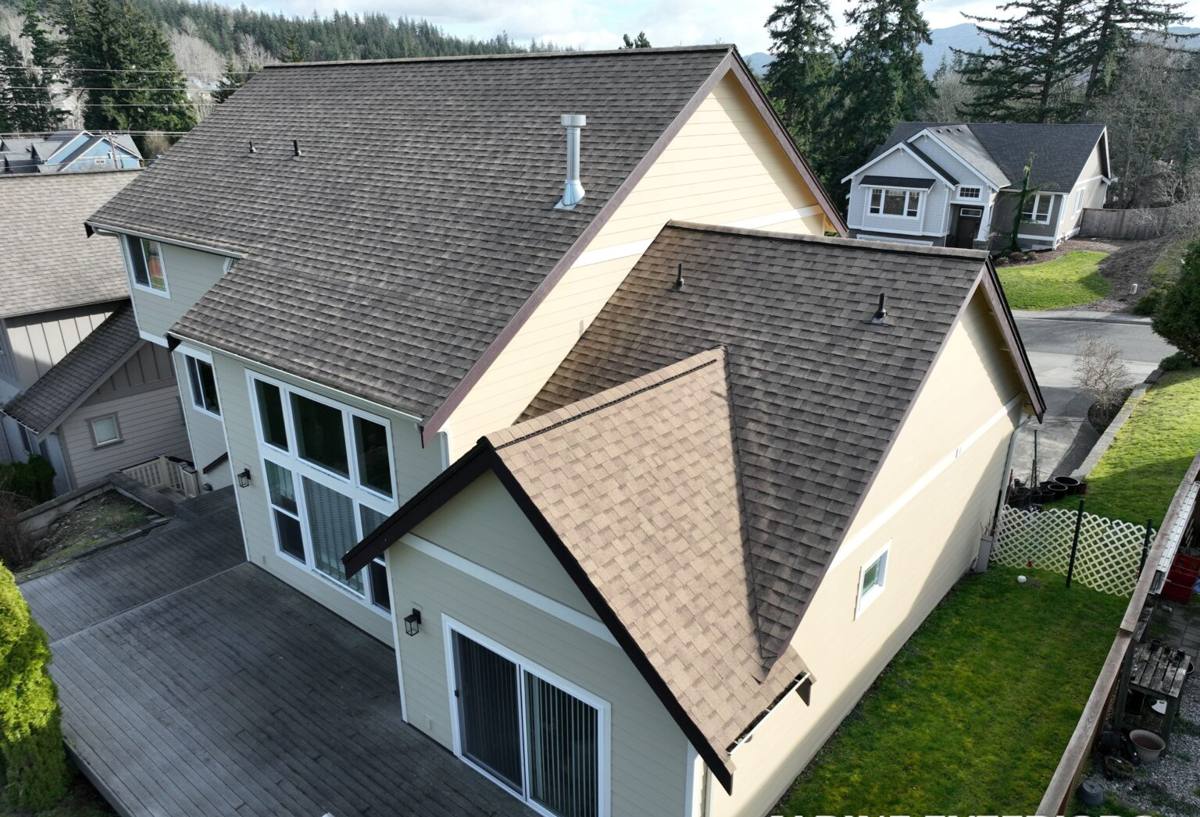
Siding on a Village of the Arts home isn't just a weather barrier — it's often part of what gives the house its character. That means the installation has to satisfy two things at once: protect the structure and keep the aesthetic the homeowner wants, whether that's a clean modern look or something that respects the bungalow-era lines of the original house.
Salt Air and Coastal Humidity
Even a few miles inland from Tampa Bay, airborne salt accelerates corrosion on fasteners, trim, and any material that isn't built to handle it. Humidity that never really lets up for half the year also means moisture gets trapped behind siding that isn't installed with proper drainage and flashing — a slow, invisible problem until it isn't.
UV Exposure
Florida sun is relentless. Paint-grade siding and lower-cost composite panels tend to chalk, fade, or crack under sustained UV well before their rated lifespan. A factory-applied, UV-stable finish matters more here than in almost any other climate zone in the country.
Wind-Driven Rain and Storm Wind Loads
Bradenton sits in a wind zone where siding has to be fastened to meet real structural requirements, not just nailed up quickly. Wind-driven rain during tropical storms and hurricanes pushes water sideways into every seam, joint, and penetration — the quality of flashing and sealant work is often what separates a wall that stays dry from one that doesn't.
What a Correct Siding Installation Actually Involves
A siding job is only as good as what's underneath it and how carefully the details are executed. On older Village of the Arts homes especially, skipping steps to save time shows up as problems within a few years.
Tear-Off and Substrate Inspection
Old siding comes off, and the sheathing underneath gets inspected for rot, insect damage, or moisture staining — common on older homes where a prior layer of siding may have been trapping water for years without anyone knowing. Any compromised wood gets replaced before anything new goes up.
Weather-Resistive Barrier and Flashing
A correctly lapped weather-resistive barrier, properly integrated window and door flashing, and careful attention to every penetration (vents, hose bibs, electrical) are what actually keep wind-driven rain out. This is the part of the job that's invisible once it's done — and the part that matters most.
Fastening to Wind Zone Requirements
Fastener spacing and type need to match the manufacturer's wind-load engineering for this zone, not a generic pattern. This is non-negotiable on a coastal Florida install.
Trim, Caulking, and Finish Details
Corner boards, trim around openings, and factory-matched caulking finish the job and protect the seams that would otherwise be the first place water gets in.
- Full tear-off with substrate inspection, not install-over-existing
- Rot or damaged sheathing replaced before new siding goes up
- Weather-resistive barrier properly lapped and sealed
- Flashing integrated at every window, door, and penetration
- Fasteners matched to wind-zone engineering requirements
- Factory-finished trim and color-matched caulking at every seam
Why We Only Install James Hardie Fiber Cement
We don't install vinyl siding, LP SmartSide, Cemplank, Allura, or primed wood products like spruce or cedar. That's a deliberate standard, not a limitation on what we're capable of installing.
Vinyl's Trade-Offs in This Climate
Vinyl is affordable and easy to install, and for some climates it's a reasonable choice. In coastal Florida wind zones, though, it's rated to lower wind-load thresholds than fiber cement, it softens and can distort in sustained heat, and its color is baked into the material itself — meaning UV fading over years shows as a dulling of the whole panel rather than a wearing coat that can be refreshed. For a neighborhood that sees both intense sun and real storm wind, we don't think it's the right long-term investment.
Engineered Wood Siding's Trade-Offs
Products like LP SmartSide use engineered wood strand technology with a resin-treated core, which performs reasonably well in many parts of the country. In a humid, salt-exposed coastal environment, wood-based composites carry more inherent moisture sensitivity than fiber cement — any breach in the factory coating or a caulking failure at a seam gives moisture a path into a wood-based substrate, and the consequences compound faster in this climate than in a dry one.
Primed Wood (Spruce, Cedar)
Real wood siding looks great and has real appeal for the bungalow character common in this area, but primed wood requires an ongoing paint maintenance cycle that Florida's UV and humidity make more demanding than almost anywhere else. It's also the most vulnerable of the common options to rot and insect damage without vigilant upkeep.
Why James Hardie
James Hardie fiber cement is non-combustible, dimensionally stable in heat and humidity, and comes with a factory-applied ColorPlus finish engineered to resist UV fading far longer than field-applied paint. Hardie's HZ5 product line is specifically engineered for high-humidity, hurricane-prone climates like ours. It carries a strong transferable warranty when installed to spec, and it holds up to the salt air, sun, and wind that define Manatee County weather. For a neighborhood where homeowners want both durability and a look that fits the character of their home, Hardie gives us both without asking a homeowner to compromise.
| Factor | Vinyl | Engineered Wood | James Hardie Fiber Cement |
|---|---|---|---|
| Wind rating in coastal FL zones | Lower threshold | Moderate, install-dependent | Engineered for high wind zones |
| UV/color stability | Fades, can't be refreshed easily | Factory coating required, wears over time | Factory ColorPlus finish, long UV resistance |
| Moisture/salt air resilience | Moderate | Sensitive if coating is breached | High, non-combustible core |
| Maintenance burden | Low, but limited fix options if damaged | Periodic coating upkeep | Low, occasional caulk/paint touch-up |
Why a Crew That Already Works Village of the Arts Matters
Every siding job in this neighborhood runs into the same handful of realities: older framing that needs a careful eye during tear-off, a housing stock where matching character matters as much as performance, and a coastal wind and humidity load that punishes shortcuts. A crew that's already worked homes in this part of Bradenton has seen these conditions repeatedly and knows what to check before the first panel goes up, rather than learning it on your house. That familiarity shows up in fewer surprises mid-job and a finished install that's built for the specific conditions of this address, not a generic template.
What the Process Looks Like
We start with an on-site assessment of the existing siding and substrate, walk through material and color options within the Hardie product line, and give a clear, honest scope of work before anything is scheduled. During the job, tear-off, substrate repair, weather barrier, and flashing all get inspected before the new siding closes the wall up — nothing gets covered until it's right. When the job is done, we walk the property with the homeowner before calling it finished.
Signs Your Current Siding Needs Attention
- Visible cracking, warping, or buckling panels
- Soft spots or discoloration near seams and window trim
- Paint that's peeling or chalking faster than expected
- Rising energy bills that suggest a compromised weather barrier
- Visible gaps or separation at corners and trim boards
If your Village of the Arts home is due for new siding, we're happy to take a look and give you a straightforward, no-pressure estimate — no obligation, just an honest read on what your home actually needs.