 Bradenton
 Deck Repair Built for Rosedale's Climate
Rosedale sits inland from the coast, but that doesn't mean your deck gets a break from Florida's weather. Between the intense year-round UV, wind-driven rain during summer storms, and the humidity that never really lets up, decks in this part of Bradenton take a steady beating whether they're twenty feet from a golf course pond or tucked behind a house on a quiet cul-de-sac. Add in the occasional hurricane-force wind event that Manatee County sees every few years, and you've got a structure that needs real attention, not just a coat of stain every so often.
We work on decks throughout Bradenton, and Rosedale's mix of newer construction and established homes means we see a wide range of deck ages and conditions. What doesn't change much from house to house is how the damage shows up: sun-bleached and cupped boards, rusted or popping fasteners, soft spots near the ground, and railings that have loosened over time. Knowing what to look for — and why it happens here specifically — is the first step to a repair that actually holds up.
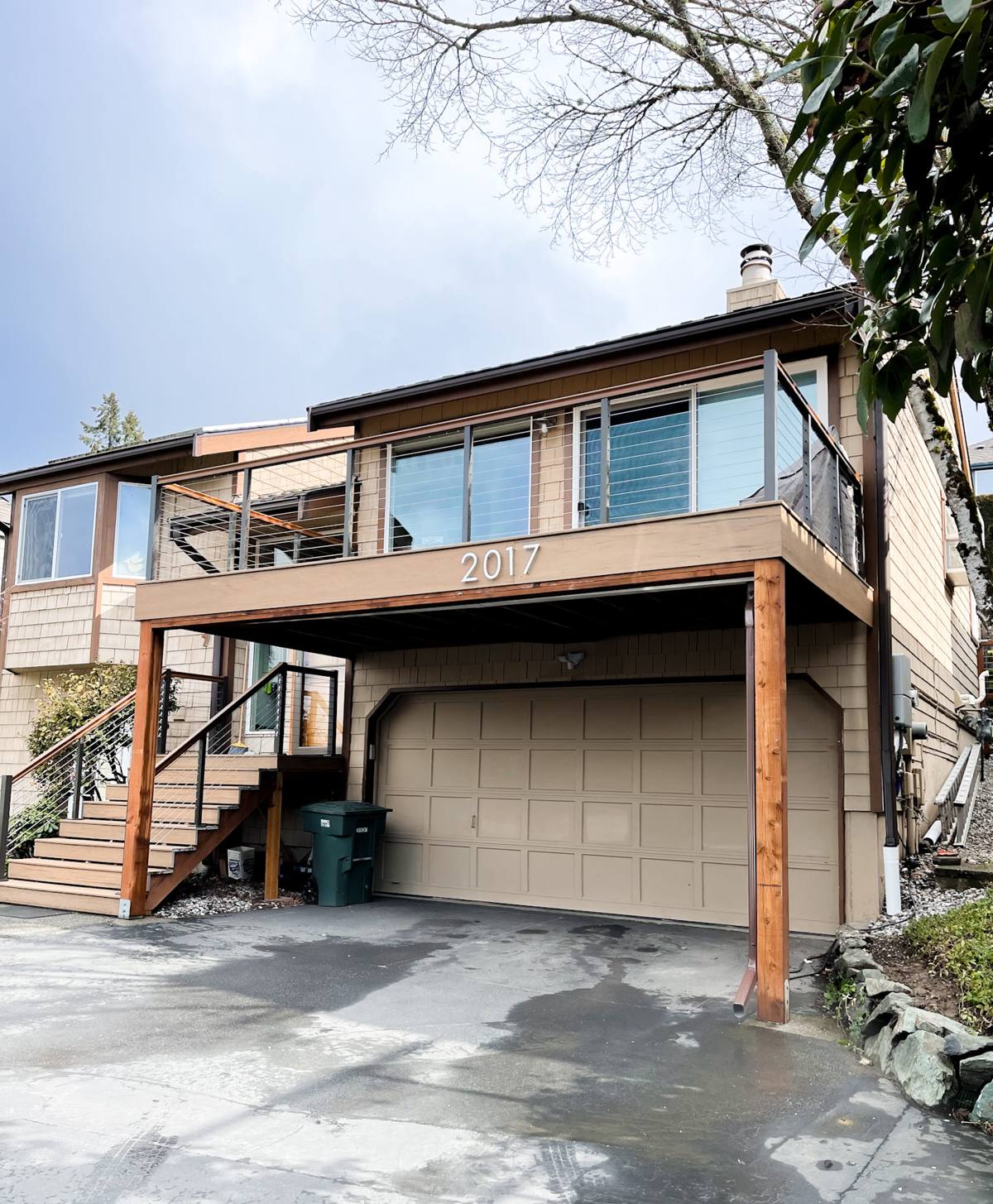
Why Decks in This Area Fail Faster Than People Expect
UV Breaks Down Wood and Finishes
Florida sun is relentless on horizontal surfaces. Deck boards face more direct UV exposure than almost any other part of a house, and that exposure dries out wood fibers, breaks down protective finishes, and causes graying, cracking, and splintering. Composite decking isn't immune either — cheaper composite products can fade unevenly or become brittle at the surface after years of sun exposure, even though they don't rot the way wood does.
Wind-Driven Rain Finds Every Gap
When storms roll through with sideways rain, water gets pushed into places it wouldn't normally reach — under railing caps, into fastener holes, between deck boards that have started to gap. That moisture sits and cycles with the humidity, which is exactly the environment that leads to rot in wood framing and corrosion in metal hardware.
Salt Air and Humidity Accelerate Corrosion
Even at Rosedale's distance from the Gulf, salt-laden air moves inland and settles into humidity that rarely drops. Standard fasteners and connectors that aren't rated for coastal exposure will rust, weaken, and eventually fail — often well before the wood around them shows obvious damage. That's one of the most common repair calls we get: a deck that looks fine on top but has hardware failing underneath.
What a Correct Deck Repair Actually Involves
A lot of deck "repairs" amount to swapping a few boards and calling it done. That approach misses the point — if the framing, fasteners, or ledger connection underneath are compromised, new boards on top just buy a little time. Here's what we check on every repair visit:
- Ledger board attachment to the house — this is the single most critical structural connection on most decks and the one most often installed incorrectly to begin with
- Joist condition, especially where joists meet the ledger or posts, where water tends to collect
- Post bases and any wood-to-concrete contact points, a common spot for rot to start from the ground up
- Fastener condition — rusted, popped, or corroded screws and bolts throughout the structure
- Railing post connections, since loose railings are both a comfort issue and a safety issue
- Board-to-board spacing and any cupping, splitting, or soft spots across the decking surface
- Stair stringer condition and connection points, which take repeated stress and often get overlooked
We also test for soft spots by hand and, where there's reason for concern, probe suspect framing directly rather than guessing from a visual inspection alone. A deck can look structurally sound from six feet away and still have a rotted joist hiding under the boards.
Repair vs. Replacement: How We Decide
Not every deck problem calls for a full rebuild, and not every issue can be patched. The honest answer depends on what's actually happening below the surface.
| Condition Found | Typical Approach | Why |
|---|---|---|
| Isolated rotted boards, sound framing | Board replacement | Framing is doing its job; only the wear surface needs attention |
| Rusted or popped fasteners, sound wood | Fastener replacement with corrosion-resistant hardware | Addresses the actual failure point before it damages surrounding wood |
| Soft or rotted joists near ledger or posts | Targeted framing repair | Structural members need to be sound; surface repair alone won't fix this |
| Ledger board separation or rot | Ledger reattachment or replacement | This connection carries a large share of the deck's load |
| Widespread rot or failure across framing | Full or partial rebuild | Piecemeal repair on failed framing isn't a lasting fix |
We'll always tell you plainly which category your deck falls into, along with the trade-offs, rather than pushing a bigger job than the situation calls for — or patching over something that needs real structural work.
Our Repair Process
1. On-Site Assessment
We walk the entire deck, check the framing from underneath where accessible, test for soft spots, and inspect fastener and connection points. You get a plain-language explanation of what we found and what it means.
2. A Clear Scope and Written Estimate
Before any work starts, you know what's being repaired, why, and roughly what it will cost. If we find something during the assessment that changes the scope, we talk to you before proceeding — no surprise add-ons after the fact.
3. The Repair Itself
Depending on scope, this might mean replacing individual boards, sistering or replacing damaged joists, reinforcing the ledger connection, upgrading fasteners to corrosion-resistant hardware, or rebuilding sections of railing or stairs. We match materials and fastening methods to what the deck actually needs to hold up in this climate, not just what's cheapest to install.
4. Final Walkthrough
We check the repaired areas with you, confirm everything is solid underfoot, and point out any maintenance items worth keeping an eye on going forward.
Fasteners and Hardware: Where a Lot of Repairs Are Won or Lost
We're picky about hardware, and it's worth explaining why. Standard, uncoated fasteners are cheaper and faster to install, but in this humidity and salt-air environment they corrode faster than the wood around them fails — leaving a deck that looks fine but has weak connection points. Our standard is to use fasteners and structural connectors rated for the exposure a Bradenton-area deck actually sees, even when it costs a bit more up front. It's a maintenance and longevity trade-off we think is worth making, and we'll explain the reasoning any time it comes up rather than just defaulting to whatever's on the shelf.
Signs You Shouldn't Ignore
- Boards that flex, bounce, or feel soft when you walk across them
- Visible gaps opening up between deck boards or at the ledger connection
- Rust streaks around screw heads or bolts
- Railings that wobble or shift when leaned on
- Wood that's gone gray and splintery, especially compared to when it was new
- A musty smell coming from underneath the deck, which often points to trapped moisture
- Stair treads that feel less solid than they used to
Any one of these on its own might be minor. Several at once, or anything involving flex or softness underfoot, is worth getting looked at before it turns into a safety issue.
Maintenance That Actually Extends the Life of a Repair
A repair is only as good as what happens to the deck afterward. A few habits make a real difference in Manatee County's climate:
- Reseal or restain wood decking on a regular schedule — UV exposure here breaks down finishes faster than in milder climates
- Keep gutters and downspouts directing water away from the deck structure, not onto it
- Sweep debris out from between boards so moisture doesn't sit trapped against the wood
- Have fasteners and connections checked periodically, especially after a significant storm
- Address small issues — a loose board, a rust spot — before they spread to surrounding material
Why Hiring a Crew That Already Works in Rosedale Matters
Deck repair isn't identical everywhere in Florida. A crew that mostly works inland, drier climates tends to under-build for the humidity and salt exposure that Bradenton homes actually face. We work decks throughout this area regularly, which means we already know the failure patterns common to Rosedale-area homes — where water tends to collect, which hardware holds up and which doesn't, and how local wind exposure affects railing and post connections. That local pattern recognition is often the difference between a repair that lasts and one that's back on the schedule in two years.
If your deck has soft spots, loose railings, rusted hardware, or just isn't holding up the way it used to, we're happy to come take a look. Reach out for a free, no-pressure estimate using the form below — we'll give you a straight assessment of what's going on and what it would take to fix it right.