 Bradenton
 Siding That Has to Earn Its Keep in Mill Creek
Mill Creek is a settled, tree-lined residential pocket of Bradenton, and like the rest of Manatee County it sits squarely in a climate that does not go easy on exterior building materials. Homes here deal with hurricane-force wind gusts during the season, intense subtropical UV exposure nearly every month of the year, wind-driven rain that finds every gap in a wall system, and a steady dose of salt air pulled in off the Gulf. None of that is unique to one street or subdivision — it is the baseline every Bradenton home has to survive, year after year, without a break.
What is specific to a neighborhood like Mill Creek is the mix of home ages and siding conditions we see when we're out there. Some houses still have their original siding from decades ago, some have been through one or two re-sides already, and some have visible sun-fade, panel warping, or soft spots around trim and windows. When we're asked to look at a home in this neighborhood, the climate story is almost always the same one: whatever was installed originally either wasn't built for this exposure, wasn't installed to the standard this exposure demands, or has simply reached the end of what it could reasonably be expected to handle.
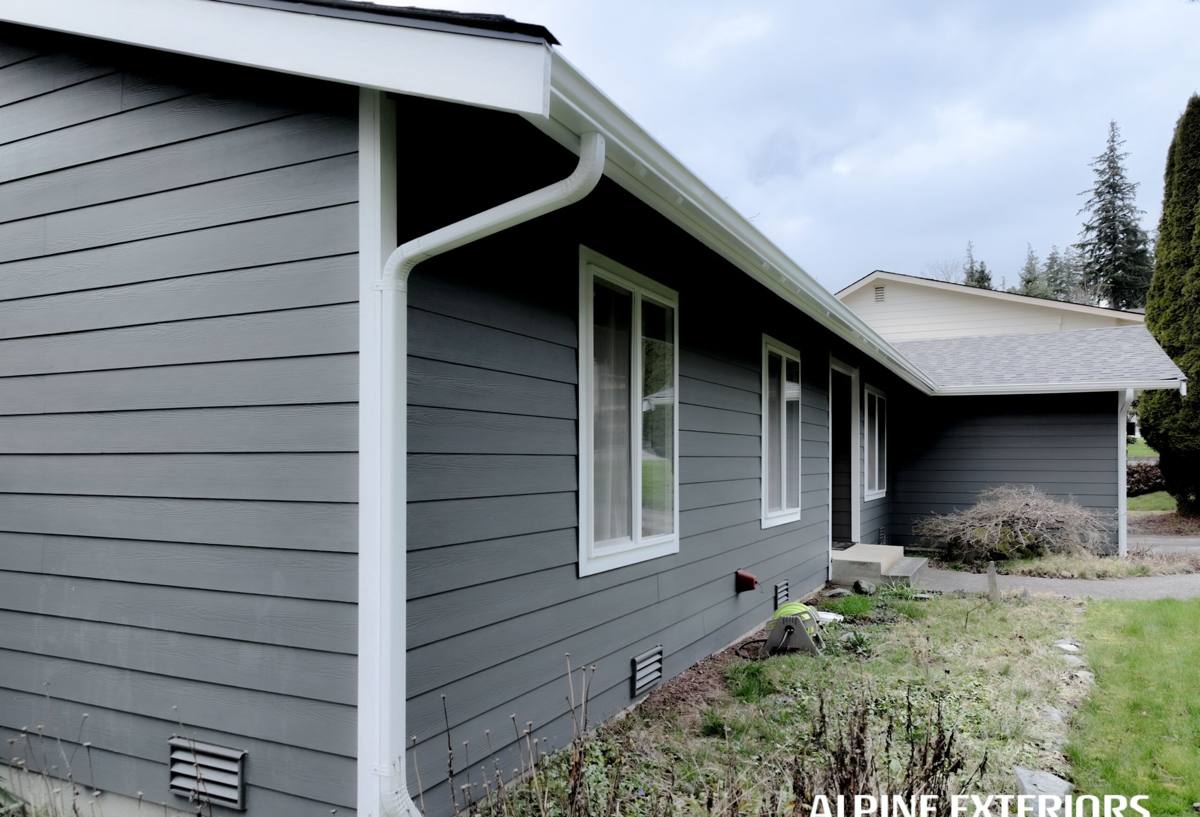
What Gulf Coast Exposure Actually Does to Siding
Wind and Wind-Driven Rain
Sustained coastal winds don't just push on a wall — they pressurize it, and during storms that pressure drives rain sideways into every seam, lap, and fastener hole. Siding that isn't installed with the right laps, flashing, and clearances will let that water behind the cladding, where it can sit against sheathing and framing long after the storm passes.
UV and Heat Cycling
Florida sun is relentless. Painted and unprotected wood-based products fade, chalk, and break down faster here than almost anywhere else in the country. Daily heat-and-cool cycling also stresses caulk joints and paint film, which is why homes here tend to need repainting far more often than the same house would in a milder climate.
Salt Air
Even a few miles inland from the water, airborne salt accelerates corrosion on fasteners, trim, and any exposed metal, and it degrades some coatings faster than fresh-air exposure would. Materials and finishes that aren't rated for it show it first at the fasteners and edges.
Moisture and Humidity
Manatee County's humidity means anything with exposed wood fiber — cut edges, damaged panels, poorly sealed joints — has a real chance to absorb moisture and stay damp. Wood-based products are especially vulnerable to swelling, delamination, and rot when that happens repeatedly over years.
Why We Standardized on James Hardie Fiber Cement
We install James Hardie fiber cement siding exclusively. We don't install vinyl, LP SmartSide, Cemplank, Allura, or primed wood siding, and we're upfront about why: given what Mill Creek homes are up against, we don't think those products give homeowners the durability-per-dollar that Hardie does over the life of the siding.
| Material | How It Holds Up on the Gulf Coast |
|---|---|
| James Hardie fiber cement | Non-combustible, engineered for high-humidity climates in its HZ5 line, factory-baked ColorPlus finish resists fading and chalking, holds paint and caulk joints well over time |
| Vinyl siding | Can warp or distort under sustained high heat and direct sun, seams are more vulnerable to wind-driven rain intrusion, color is molded-in and fades unevenly over years |
| Engineered wood (LP-style) / primed wood | Wood-fiber core is more sensitive to sustained moisture exposure at cut edges and damaged spots; requires diligent caulking and repainting to keep ahead of UV and humidity |
None of these are junk products in every climate — vinyl and engineered wood both have a place. But we're not writing a warranty and standing behind an install in a hurricane-exposed, high-UV, salt-air environment with a product we don't fully trust to perform for decades. That's the standard we hold ourselves to, and it's why every quote we write for a Mill Creek home is for James Hardie.
What a Correct Fiber Cement Install Actually Involves
Fiber cement siding is only as good as the installation underneath it. A rushed or corner-cut install can undercut even the best material, and in a climate like this the mistakes show up fast — usually at the next big storm.
- Weather-resistive barrier and flashing: a continuous water-resistive barrier behind the siding, with proper flashing at every window, door, and penetration, so wind-driven rain has nowhere to travel behind the cladding.
- Correct fastener placement: Hardie-approved fasteners driven at the manufacturer's specified spacing and location — not just "close enough" — to hold under coastal wind loads.
- Proper clearances: siding held off the roofline, deck, and grade by the minimum gaps James Hardie specifies, so water sheds away instead of wicking up into the bottom edge of the panel.
- Sealed and caulked joints: every butt joint, corner, and trim intersection sealed with a product rated for the movement and exposure, not just whatever was on the truck.
- Factory-finished panels handled correctly: ColorPlus panels cut with dust-controlled methods and touched up with the matched ColorPlus product, so the factory finish isn't compromised on day one.
Skip any one of these and you can end up with siding that looks right for a year or two, then starts showing moisture problems, fastener corrosion, or wind damage well before it should.
Our Process for a Mill Creek Project
1. On-Site Assessment
We walk the exterior, look at the current siding condition, check for any moisture or rot at trim and penetrations, and talk through what you actually need — a full re-side, or repair/replacement of specific damaged sections.
2. Scope and Written Estimate
You get a clear, itemized estimate: material line, HZ product and color, trim and flashing details, and a realistic timeline. No vague allowances, no pressure to sign on the spot.
3. Prep and Protection
Landscaping, walkways, and outdoor fixtures get protected before old siding comes off. If we find soft or damaged sheathing underneath, we flag it and address it before new siding goes up — never buried under a new panel.
4. Installation to Spec
Panels are installed following James Hardie's installation instructions for our wind and humidity zone — correct fastening, flashing, and clearances at every step, not just where it's visible.
5. Cleanup and Walkthrough
Daily jobsite cleanup, then a final walkthrough with you before we call the job done, so you can see the finished work and ask questions on the spot.
Choosing the Right Hardie Line and Color
James Hardie makes climate-specific HZ product lines, and homes in our part of Florida are matched to the HZ5 line, engineered for high-humidity, high-moisture climates. Beyond the plank profile itself (lap siding, board-and-batten, or shingle-style, depending on the home), the ColorPlus finish is worth understanding: it's a multi-coat, baked-on factory finish that resists fading and chalking far better than field-applied paint, and it comes with its own finish warranty separate from the substrate warranty. For a neighborhood with a real mix of architectural styles like Mill Creek, that combination — the right HZ engineering plus a factory finish built for this sun — matters more than picking a color off a chip alone.
What Drives the Cost of a Siding Job
| Cost Factor | Why It Matters |
|---|---|
| Home size and wall complexity | More square footage, more corners, gables, and dormers all add labor and material |
| Full re-side vs. tear-off condition | Removing old siding down to sheathing costs more than siding over a sound, prepped surface, but hidden rot found underneath can add scope |
| Trim and accessory work | Fascia, soffit, corner boards, and window/door trim add cost but are often where water problems start if skipped |
| Plank profile and color | Board-and-batten or shingle-style profiles typically cost more in labor than standard lap siding; ColorPlus vs. field-painted affects both price and long-term maintenance |
| Access and site conditions | Two-story sections, tight lot lines, or landscaping close to the house can add setup time |
We don't publish blanket prices because these factors genuinely change the number from house to house — but every estimate we give breaks these out so you can see what you're paying for.
Why a Local Crew Matters
Siding contractors who work Bradenton and Manatee County regularly know how homes in this area age under coastal sun and storms, what permitting and inspection expectations to plan around locally, and how to size up wind exposure on a given lot. That local repetition matters more than it sounds — it's the difference between a crew guessing at what a coastal-humidity climate needs and a crew that's already seen how different siding choices held up five and ten years out on homes just like yours. When you're vetting anyone to work on your home, ask how much of their current work is in this specific region, not just in Florida broadly.
What to Check Before You Hire
- Florida contractor license and current insurance, verifiable and offered without hesitation
- Manufacturer training or certification specific to James Hardie installation
- A written estimate that itemizes material, trim, flashing, and labor separately
- A clear explanation of the warranty — both the manufacturer's product warranty and the installer's workmanship warranty
- Recent, verifiable work in your area, not just a regional service claim
- A straight answer, with reasoning, when you ask why they do or don't install a particular siding product
Get a Straight Answer for Your Home
If your Mill Creek home's siding is original, aging, or just not holding up the way it should against Bradenton's sun, storms, and salt air, we're glad to take a look. Reach out for a free, no-pressure estimate — we'll walk the exterior with you, tell you honestly what we see, and lay out exactly what a proper James Hardie install would involve for your home. Use the form below to get started.