 Bradenton
 Installation Is What Decides Whether Siding Lasts on a Barrier Island
Holmes Beach sits on Anna Maria Island, a barrier island in the Gulf of Mexico within Manatee County, and that location changes what a siding job needs to survive. Hurricane-force wind is a real design condition here, not a rare event to plan around once a decade. Salt air moves in off the Gulf side and the Intracoastal side alike, settling onto every exterior surface whether or not a storm is anywhere nearby. Add year-round UV that's among the most intense in the country and rain that regularly arrives sideways instead of straight down, and it becomes clear why how the siding got installed matters as much as what it's made of.
This page is specifically about siding installation in Holmes Beach — new construction and full re-siding, not spot repair — and what separates a correct job from one that simply looks finished the day the crew packs up. We install James Hardie fiber cement exclusively, and everything below assumes that system, since it's the only one we install to spec on homes this close to open water.
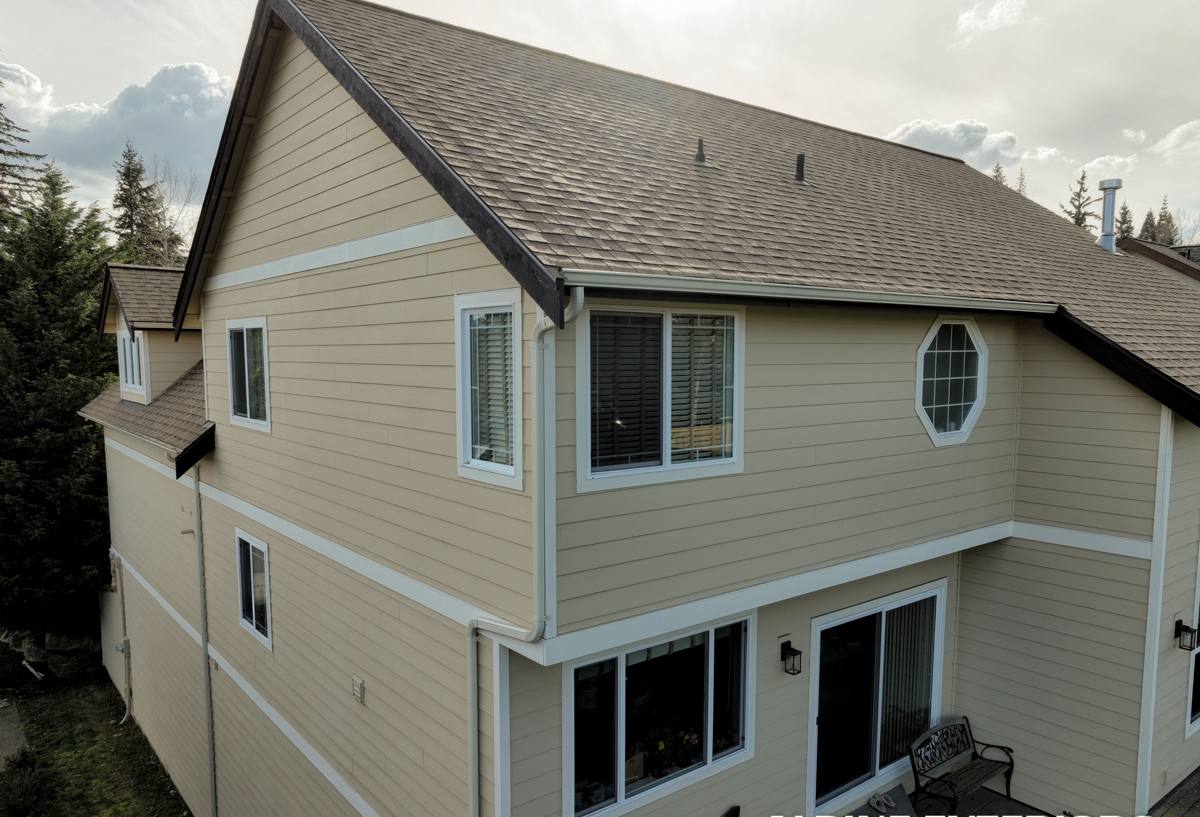
What Holmes Beach's Climate Actually Demands From an Installation
Salt Air and Corrosion at Every Fastener
On a barrier island, salt-laden air isn't an occasional condition — it works on every exposed fastener, flashing edge, and piece of trim hardware every day the wind blows onshore. Standard-grade fasteners corrode faster here than almost anywhere inland in Manatee County, and once a fastener has lost holding strength to rust, it doesn't announce itself until a panel has already started to work loose. Hardware grade isn't a place to save money on a Holmes Beach installation; it's one of the first things that determines how long the job actually holds.
Hurricane-Force Wind and Fastening to Spec
Siding on a home this exposed to open water has to resist real uplift and lateral wind loads, not just shed rain. That means following James Hardie's fastener type, spacing, and placement specification exactly — not a shortened version of it — because the fastening schedule is what keeps panels attached through the wind speeds this coastline actually sees. A panel that's under-fastened, or fastened with the wrong nail, looks identical to a correctly installed one right up until the first serious wind event finds the difference.
Wind-Driven Rain and the Water-Resistive Barrier
Rain that arrives with real wind behind it doesn't run down a wall — it gets driven sideways into panel joints, window and door flashing, and every seam where trim meets field siding. The water-resistive barrier underneath the siding, and how carefully it's lapped, taped, and integrated with flashing at every penetration, matters as much as the cladding itself. A barrier installed correctly sheds wind-driven water before it reaches the sheathing; a rushed one hands that water a path straight in.
Year-Round UV and Finish Durability
Florida's UV exposure doesn't ease off seasonally the way it does farther north, and a south- or west-facing wall on Holmes Beach takes that load nearly every day of the year. That's part of why we install Hardie's factory-applied ColorPlus finish rather than relying on field-applied paint — a factory finish cured under controlled conditions holds color and resists UV breakdown longer than paint applied on site. Installation has to protect that finish through handling, cutting, and touch-up so the wall doesn't show its first fade line at a field cut or a scuff from the install itself.
What a Correct James Hardie Installation Actually Involves
Fastening Pattern and Spacing
Hardie publishes exact fastener type, spacing, and placement requirements, and they vary by product line, exposure category, and wind zone. Following that spec is what keeps the manufacturer's warranty valid and what keeps panels secured through the wind loads a Gulf-facing or Intracoastal-facing home actually experiences, as opposed to what an inland home a few miles away might see.
Clearances Above Grade, Roofline, and Decks
Hardie specifies minimum clearance between siding and grade, roofing, decks, and pool decks. On barrier island lots where the ground has been built up over the years, or where a pool deck or lanai was added after the original siding went in, that clearance is one of the first things to check — and often the first thing a previous installation got wrong. Siding sitting too close to a horizontal surface takes on splash-back and standing moisture it was never built to handle.
Flashing and Sealant at Every Penetration
Windows, doors, hose bibs, vents, and exterior fixtures all interrupt the plane of the siding, and each interruption is a place water can get behind the cladding if it's flashed or sealed incorrectly. This is the slowest, least visible part of an installation, and on a home exposed to wind-driven rain off the Gulf, it's the part that decides whether the wall stays dry behind the siding for decades or starts trapping moisture within a few seasons.
Field-Cut Edges and ColorPlus Touch-Up
Every panel cut on site — around an opening, at a corner, at the end of a run — needs that cut edge sealed or primed to Hardie's specification before it goes up, and any nick in the factory ColorPlus finish needs the correct matched touch-up product, not a generic exterior paint that weathers at a different rate than the surrounding panel. Skipping either step is one of the more common reasons fiber cement takes on water or shows visible patchwork within the first few years, and neither failure is the material's fault.
Where Installations Go Wrong Fastest This Close to the Water
| Shortcut | What it looks like on install day | How it shows up later on a Holmes Beach home |
|---|---|---|
| Standard fasteners instead of corrosion-resistant grade | No visible difference | Rust streaking and loosened panels within a few years of salt exposure |
| Siding installed tight to grade or a deck | Looks clean and finished | Wicking moisture and staining at the bottom courses |
| Rushed water-resistive barrier lapping | Covered by siding, unseen | Hidden moisture intrusion at the sheathing, often not found until siding is removed |
| Unsealed field-cut edges | Cut edge is hidden by trim or overlap | Swelling or damage at that specific cut point, often at corners and openings first |
| Under-fastened panels to save time | Panel appears secure | Panels working loose or lifting in the first significant wind event |
None of these show up on a walkthrough the week the job finishes. They show up after the first real storm season, which is exactly when a homeowner least wants to discover them.
Wind Zone and Permitting Considerations for Manatee County
Coastal properties like those on Holmes Beach typically fall within Florida's wind-borne debris region, which carries added wind load and, depending on the scope of work, opening protection requirements under the Florida Building Code. A siding installation permit here generally needs to document that the assembly meets the wind pressure ratings for the property's exposure category, and inspectors who work this island are familiar with what that documentation should look like. Getting that paperwork wrong — or having it prepared by someone unfamiliar with barrier island wind exposure — is a common source of delay on projects out here, and it's avoidable with a contractor who pulls permits in this area regularly.
How Our Installation Process Works
A siding installation on Holmes Beach follows the same sequence whether it's new construction or a full re-side, though the starting condition of the wall changes some of the steps:
- Inspect existing sheathing and framing on re-side projects for hidden moisture or wind damage before anything new goes on the wall
- Install or verify the water-resistive barrier, lapped and taped correctly at every seam and penetration
- Flash all windows, doors, and penetrations before siding installation begins, not patched in around it afterward
- Install James Hardie panels and trim to the manufacturer's fastening schedule and clearance specifications for this wind zone
- Seal or prime every field-cut edge and touch up any nicks in the ColorPlus finish with the correct matched product
- Final walkthrough covering clearances, fastener pattern, and flashing details before we consider the job complete
We document each of these stages, which matters both for our own quality control and because Hardie's transferable warranty depends on the installation meeting its published specification.
New Construction vs. Re-Siding an Existing Home
New construction gives us a clean shot at getting the water-resistive barrier and flashing details right from the start, with no hidden damage to work around. Re-siding an existing Holmes Beach home is a different job — it starts with finding out what condition the sheathing and framing are actually in after however many years of salt air and storm seasons, since that determines whether we're installing over a sound substrate or need to address damage first. We'll tell you honestly which situation applies before quoting a scope of work, rather than assuming the wall underneath is fine.
Why We Only Install James Hardie on Homes Out Here
We install James Hardie fiber cement exclusively — not vinyl, not LP SmartSide, not primed wood — because it's non-combustible, holds up to the moisture cycling a Gulf-facing home goes through, and comes with a factory-applied finish engineered for sustained UV exposure rather than one applied in the field. Hardie's climate-engineered HZ product lines are built specifically for higher-moisture, higher-wind climates like this one, and the manufacturer's transferable warranty backs that up when the installation is documented to spec. That's the standard we hold every installation to, and it's why we don't offer alternatives that ask a homeowner to accept more maintenance or more risk in exchange for a lower upfront cost.
Why It Matters That We Already Work Holmes Beach
A crew that mostly installs siding inland can still do competent work here, but a barrier island installation carries variables that come up more often on this kind of lot than elsewhere in Manatee County — wind load requirements tied to open-water exposure, salt corrosion patterns from two directions on some properties, and permitting that reflects the wind-borne debris region rather than a standard inland jurisdiction. Working this island regularly means we're not learning those requirements mid-project. We know what fastener grade actually holds up out here, what clearance detail gets missed most often on older homes, and how local permitting expects wind load documentation presented, because we've installed on homes like yours before.
That familiarity shows up as a more accurate estimate from the start and fewer surprises once work is underway, because the inspection accounts for how this environment actually behaves instead of applying a generic mainland checklist.
Get a Straight Answer on Your Siding Installation
Whether you're planning new construction, a full re-side after storm damage, or you're just tired of maintaining a wall that never should have needed this much upkeep, we're glad to walk the property and explain exactly what a correct installation would involve on your home. Reach out below for a free, no-pressure estimate.