 Bradenton
 Building a Deck That Actually Holds Up in Rosedale
A deck in Rosedale has to do more than look good for a season or two. Between the sun overhead, the humidity that never really leaves, and the occasional tropical system that pushes through Manatee County, an outdoor deck here is under constant stress that decks in drier, cooler climates simply don't face. A lot of the decks we get called out to repair or replace weren't built wrong on purpose — they were built to a generic standard instead of a Gulf Coast standard. That difference shows up in five years, not fifty.
This page is about one thing: custom deck design and construction for homes in and around Rosedale, Bradenton. We're not going to give you a generic national rundown on decks. We're going to walk through what actually matters when you're building one that has to survive here.
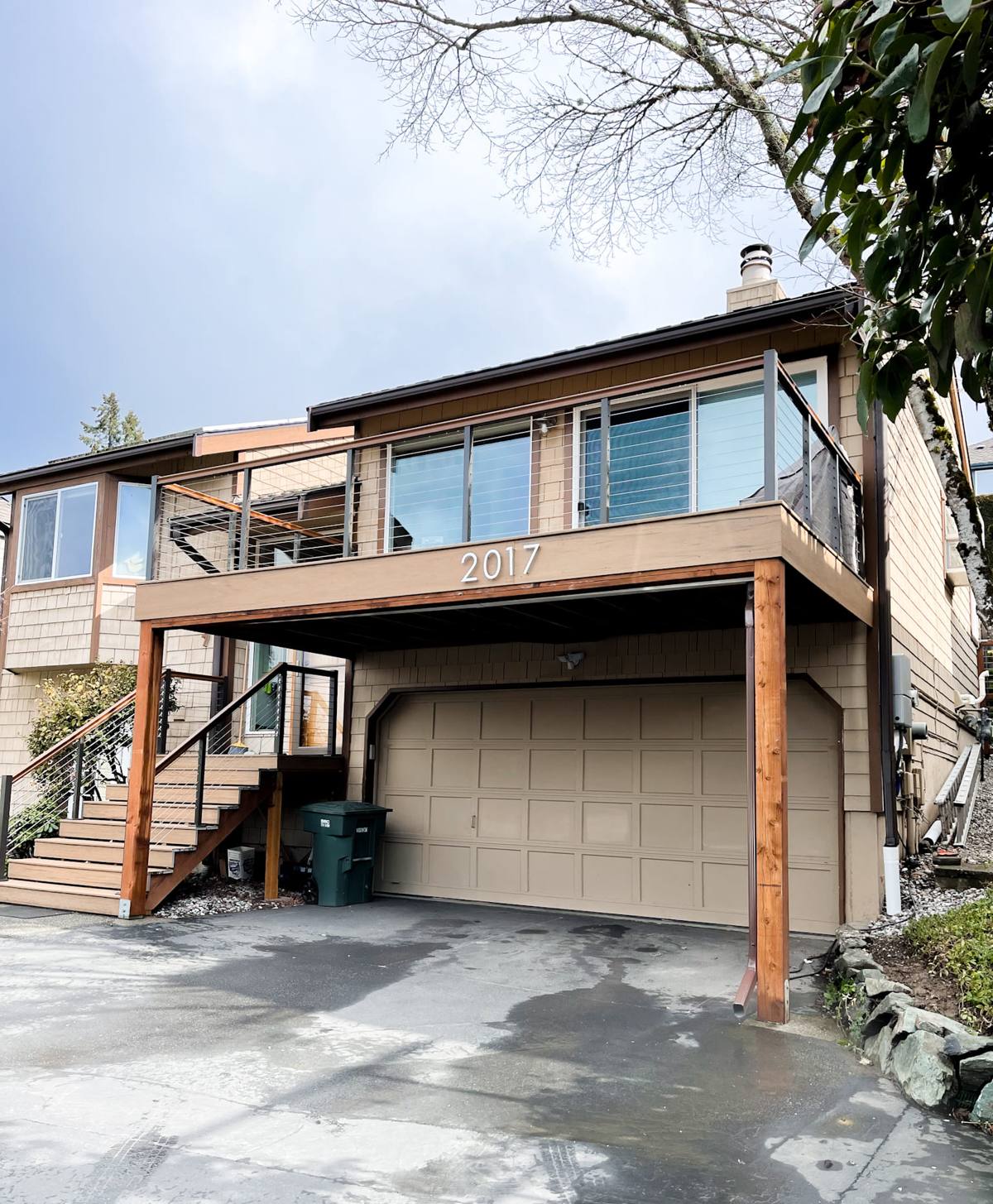
What Bradenton's Climate Does to an Outdoor Deck
Every material decision on a deck project traces back to the same set of environmental pressures. If you understand these, you understand why we build the way we do.
Sun and UV Exposure
Florida sun is intense and nearly year-round. UV breaks down the surface fibers of wood decking, fades stains and finishes, and degrades the plastic components in lower-grade composite boards faster than the manufacturer's marketing suggests. Any decking material we recommend has to have real UV stabilization built in, not just a coating on top.
Wind-Driven Rain and Humidity
Afternoon storms don't just wet the deck surface — wind-driven rain gets pushed sideways into ledger connections, under railings, and into any gap where two pieces of wood or metal meet. Combined with our humidity, that moisture doesn't dry out quickly. It sits. That's where rot, corrosion, and mold start, almost always in places you can't see from a casual walk-across.
Hurricane-Force Wind
Decks are structures, and structures need to be engineered for wind load, not just weight load. A deck that's fine holding a grill and a table of guests can still fail in high wind if the railing posts, footings, or ledger attachment weren't sized for lateral and uplift forces. This is non-negotiable in our area.
Salt Air
Bradenton sits close enough to the coast that salt-laden air travels inland and accelerates corrosion on any exposed metal — fasteners, brackets, hinges, railing hardware. Standard hardware-store screws and connectors that would last decades inland can start rusting and staining decking within a couple of years here.
Decking Material Options for Rosedale Homes
There's no single "best" decking material — there's a best material for your budget, your maintenance appetite, and how the deck will actually be used. Here's how the common options stack up under our climate conditions:
| Material | UV / Fade Resistance | Moisture Behavior | Maintenance | Typical Lifespan Here |
|---|---|---|---|---|
| Pressure-treated pine | Fades and grays without upkeep | Absorbs water; needs sealing | Annual cleaning and re-sealing | 10–15 years with upkeep |
| Tropical hardwood (e.g. ipe) | Fades to gray unless oiled | Naturally dense, resists rot well | Periodic oiling for color; low rot risk | 20–25+ years |
| Capped composite | Strong UV resistance | Doesn't absorb water; won't rot | Occasional washing only | 25–30 year warranty range |
| Uncapped/older composite | Fades and can stain | Some moisture absorption over time | More cleaning to prevent mold | Shorter than capped composite |
| PVC decking | Excellent UV resistance | Fully moisture-proof | Very low maintenance | 25–30+ years |
For most Rosedale homeowners, we steer conversations toward capped composite or PVC decking specifically because of the moisture and UV combination we deal with locally. Real wood still has a place — it has a warmth and character composite can't fully match — but it's an honest trade: better looks up front for more upkeep over the life of the deck.
The Structure Underneath Matters More Than the Decking
Homeowners naturally focus on the board they'll be walking on, but the boards are the last thing to fail. Everything underneath is what determines whether the deck is actually safe and long-lasting.
Footings and Posts
Footing depth and size depend on soil conditions and the loads the deck needs to carry, and they need to be sized to resist wind uplift, not just downward weight. This is where corners get cut on rushed jobs, and it's the hardest thing to fix after the fact because it means tearing the deck apart.
Ledger Board Attachment
Where the deck attaches to the house is one of the most common failure points in any climate, and more so here because of moisture intrusion. Proper flashing, correct fastener spacing, and a real gap or barrier to keep water from tracking behind the ledger are all things we treat as mandatory, not optional upgrades.
Fasteners and Hardware
Given the salt air, we use fasteners and structural connectors rated for coastal or corrosive environments — stainless steel or coated hardware designed to resist rust, not standard galvanized parts that will streak your decking with rust stains within a few seasons.
Hurricane Tie-Downs and Railing Anchoring
Railing posts and structural connections get tied down in a way that accounts for wind uplift and lateral load, consistent with the wind-resistance standards that apply to structures in our part of Florida. This isn't an add-on — it's part of how we design the frame from the start.
Permitting and Wind-Load Requirements in Manatee County
Deck construction in Manatee County requires a building permit, and inspections happen at multiple stages — typically footing, framing, and final. The plans need to reflect the wind-load requirements that apply to our region under the Florida Building Code, which is stricter about lateral and uplift resistance than codes in most of the country.
If your property is in a community with an HOA or architectural review board, like many homes in and around Rosedale, there's usually a separate approval step before construction can even start — covering things like deck footprint, railing style, and how the structure reads from the street or the golf course side of the lot. We handle both tracks: the county permit and the HOA submission, so you're not the one chasing down two separate approval processes.
Our Process From First Call to Finished Deck
- On-site consultation. We walk your property, look at how the deck will be used, check sun and drainage patterns, and talk through material options honestly — including what we wouldn't recommend for your situation and why.
- Design and engineering. We put together a layout and structural plan sized correctly for the space, the intended use, and local wind-load requirements.
- Permitting and HOA approval. We prepare and submit what's needed for Manatee County permitting, and for HOA architectural review where applicable, before any construction begins.
- Site prep and footings. Footings go in first and get inspected before we build on top of them — this is not a step we skip to save time.
- Framing. The structural frame, ledger connection, and hardware go in per the engineered plan, using coastal-rated fasteners throughout.
- Decking, railing, and finish work. Your chosen decking material, railing system, and any built-ins (stairs, lighting, fascia) get installed and detailed.
- Final inspection and walkthrough. We schedule the final county inspection and walk the finished deck with you before calling the job done.
Cost Factors for a Rosedale Deck Project
Every deck is different, so we're not going to throw out a single number that doesn't mean anything for your project. What actually drives the cost is a combination of these factors:
| Factor | Why It Affects Cost |
|---|---|
| Size and footprint | More square footage means more material, footings, and framing labor |
| Decking material | Pressure-treated, hardwood, composite, and PVC all sit at different price points and installation labor levels |
| Height off grade | Taller decks need more substantial framing, railing, and often stairs |
| Access and site conditions | Tight side yards, existing landscaping, or limited equipment access can add labor time |
| Railing and rail infill style | Cable, glass, and custom rail designs cost more than standard baluster railing |
| Extras | Built-in lighting, pergolas, benches, or multi-level designs add scope |
The most useful thing we can do on this front is come look at your specific property and give you real numbers based on real conditions, not a range pulled from a national average that has nothing to do with Bradenton labor, materials, or permitting.
Maintenance Checklist for Coastal-Climate Decks
Whatever material you choose, a little regular attention goes a long way in our climate. Here's what we tell every homeowner to stay on top of:
- Rinse salt residue and pollen off the deck surface and railings periodically, especially after storms
- Check fasteners and railing connections annually for corrosion or loosening
- Keep gutters and downspouts clear so runoff isn't dumping extra water onto or near the deck structure
- Inspect the ledger board area at the house for any signs of moisture staining or soft wood
- Re-seal or re-oil wood decking on the schedule the manufacturer or installer recommends — don't wait until it's visibly gray and dry
- Trim back landscaping that keeps the deck surface shaded and damp longer than it needs to be
- After any major storm, do a quick visual check of posts, railings, and stairs before heavy use
Why a Local Rosedale Crew Makes a Difference
There's a real difference between a contractor who builds a deck once and moves on to the next county, and a crew that's actually worked in your neighborhood before. We know what Manatee County inspectors look for at each stage. We know that communities like Rosedale often have HOA design guidelines layered on top of the county permit process, and we build that into the timeline instead of letting it surprise you halfway through the project. And because we're local, if something needs a follow-up visit — a squeak, a loose baluster, a question about maintenance — we're not driving in from out of the area to handle it.
A deck is one of the more exposed structures on your property. It sits outside year-round, takes the sun and rain directly, and has to keep doing its job through every hurricane season Bradenton throws at it. Building it right the first time, with materials and hardware suited to this specific climate, is what keeps you off the repair-and-replace cycle.
If you're thinking about a custom deck for your Rosedale home, we're happy to come take a look, talk through what makes sense for your property, and put together a free, no-pressure estimate. Just fill out the form below to get started.