 Bradenton
 Why Siding Fails Faster in Cortez
Cortez sits close to the water, and that proximity shapes everything about how exterior materials age here. Homes in this part of Manatee County take on a combination most inland Florida properties never see: near-constant salt-laden air, wind-driven rain that gets forced sideways into wall assemblies during storms, and UV exposure that runs at high intensity almost year-round. Add the occasional hurricane-force wind event, and you have a climate that is genuinely harder on siding than most manufacturers' national marketing accounts for.
Salt air is the piece homeowners underestimate most. It doesn't just sit on the surface of a wall — fine salt particles work into seams, fastener heads, and any gap in a coating system, then draw moisture in behind the material. On products that aren't engineered for that exposure, this shows up as premature swelling, bubbling paint, soft spots at butt joints, and corrosion at nail heads years before a homeowner expected to think about siding again.
Wind-driven rain compounds the problem. During a tropical system or even a strong afternoon squall off the water, rain doesn't fall straight down in Cortez — it gets pushed horizontally into the wall. Siding that relies on face-sealed caulk joints or has marginal water-resistive barrier detailing behind it will eventually let some of that moisture through. Once it's behind the cladding, drying potential matters as much as the siding material itself.
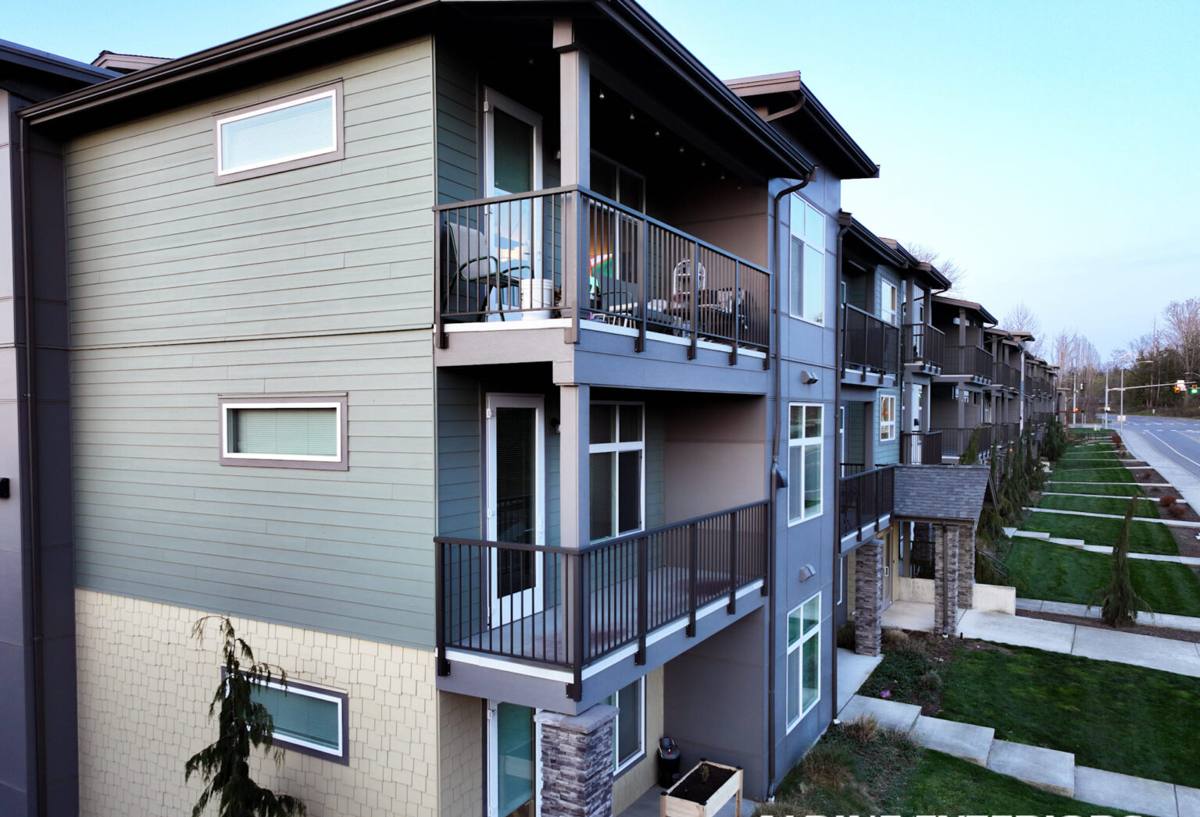
What a Correct Siding Replacement Actually Involves
Siding replacement is not a cosmetic swap. Done correctly, it's a full reset of the water management system on the exterior of the house. Skipping steps here is exactly how homes end up with hidden rot behind brand-new-looking siding five years later.
The Parts Homeowners Don't See
- Removal of the old cladding down to the sheathing, with an inspection for water damage, soft wood, or rusted fasteners before anything new goes up
- Repair or replacement of any compromised sheathing — covering over damaged substrate just locks the problem inside the wall
- A correctly lapped weather-resistive barrier (housewrap or equivalent) that actually sheds water downward instead of trapping it
- Proper flashing at every window, door, and penetration — this is the single most common failure point on poorly done siding jobs
- Correct fastener type, spacing, and depth for the specific siding product, not a generic nailing pattern
- Manufacturer-specified clearances at grade, roofline, and trim so the assembly can drain and dry
Any contractor who wants to talk primarily about color and style before discussing what's happening behind the panel is skipping the part of the job that actually determines how long it lasts.
Why We Install Only James Hardie Fiber Cement
We install James Hardie fiber cement siding exclusively. We don't offer vinyl, LP SmartSide, Cemplank, Allura, or primed wood siding, and that's a deliberate professional standard, not an oversight.
Vinyl siding is inexpensive and easy to install, and in a mild inland climate it can perform acceptably for years. On a waterfront property exposed to hurricane-force gusts, though, vinyl's weak point is mechanical: it can crack, warp, or blow off in high wind, and it softens and distorts in the kind of sustained heat and direct sun Florida delivers most of the year. It also isn't a fire-rated material, which matters to some homeowners and insurers.
Engineered wood products like LP SmartSide use a wood-strand substrate with a protective treatment and coating. That coating is the entire defense — if it's compromised at a cut edge, a fastener hole, or a joint that isn't perfectly sealed and maintained, moisture can reach the wood substrate and the deterioration from there can be fast, especially in a humid, salt-air environment where moisture doesn't fully dry out between events.
Fiber cement products from other manufacturers, such as Cemplank or Allura, are chemically similar to Hardie's — cement, sand, and cellulose fiber — but we've standardized on Hardie specifically for its ColorPlus factory-applied finish (baked-on, not field-brushed, which matters enormously in intense UV), its HZ product lines engineered for specific climate zones including high-humidity, high-moisture regions like ours, and a warranty structure we're comfortable standing behind on every job. Primed spruce or cedar requires the most homeowner upkeep of any option — regular repainting and sealing — which is a hard sell on a home that's already fighting salt air and sun.
None of these alternative products are junk. They're reasonable choices in the right setting. Cortez's combination of wind, salt, and UV just isn't that setting, and we'd rather turn down work than install something we don't expect to hold up on this exposure.
Comparing Siding Options for This Exposure
| Material | Wind/impact resistance | Salt air behavior | UV/fade resistance | Maintenance burden |
|---|---|---|---|---|
| James Hardie fiber cement (HZ) | Strong when installed to spec | Non-combustible, resists moisture intrusion at core | ColorPlus factory finish holds color | Low |
| Vinyl siding | Can crack or blow off in high gusts | Salt residue accelerates surface breakdown | Prone to fading, softening in heat | Low, but limited lifespan here |
| Engineered wood (LP SmartSide) | Moderate | Coating is sole defense against moisture | Depends on coating integrity | Moderate to high |
| Primed wood/cedar | Moderate | Vulnerable without diligent upkeep | Requires repainting | High |
This table reflects general material behavior, not a claim about any specific product's failure rate. The point is straightforward: in a coastal, high-wind, high-UV environment like Cortez, some materials simply require more ongoing intervention from the homeowner to reach the same lifespan a correctly installed fiber cement system delivers with routine maintenance.
Signs a Cortez Home Needs Siding Replacement Soon
- Visible warping, bowing, or buckling panels, especially on the sides of the house that face open water or prevailing wind
- Soft or spongy areas when you press on the siding near the bottom courses or below windows
- Paint or coating that's peeling, chalking heavily, or fading unevenly panel to panel
- Rust streaking from fastener heads, which often signals the fasteners themselves are failing
- Gaps opening up at butt joints, corners, or trim where caulk has failed
- A musty smell or visible staining on interior walls that share an exterior wall with suspect siding
- Rising cooling bills that can't be explained by anything else, which sometimes points to moisture-saturated wall insulation
Any one of these on its own might just need a repair. Several at once, or any sign of moisture reaching the sheathing, usually means it's time to talk about full replacement rather than patching.
Our Siding Replacement Process
1. On-Site Assessment
We walk the exterior with you, check the condition of the current siding and, where accessible, the substrate behind it, and talk through what your specific elevation exposure to wind and water actually looks like for your property.
2. Product and Profile Selection
We'll go over the relevant James Hardie HZ product line and profile options — lap, shingle, panel — and colors from the ColorPlus palette, matched to what makes sense for your home's design and this climate.
3. Removal and Substrate Repair
Old material comes off, sheathing gets inspected, and anything compromised gets repaired before a single new panel goes up. We won't cover over damage to hit a schedule.
4. Weather Barrier and Flashing
This is the step that determines whether the job lasts. Correct housewrap lapping and flashing at every penetration is non-negotiable on our jobs.
5. Installation to Manufacturer Spec
Fastener type, spacing, and clearances follow James Hardie's published installation requirements for this climate zone — not a generic approach carried over from a different product or region.
6. Final Walkthrough
We review the finished work with you, cover basic care, and make sure you know what the warranty covers going forward.
Why It Matters to Hire a Crew That Already Works in Cortez
Siding installation isn't uniform across Florida, let alone across the country. A crew that mostly works inland, or mostly works in milder climates, doesn't build the same instincts around flashing details, fastener corrosion resistance, and clearance requirements that a crew working waterfront Manatee County properties develops job after job. Knowing how a specific coastal exposure behaves — which elevations take the worst of the wind-driven rain, how salt air concentrates around certain sites, what tends to fail first on older area homes — comes from doing this work here repeatedly, not from a general contracting background.
It also matters for permitting and code compliance. Coastal Manatee County properties can carry wind-load and flood-zone considerations that affect installation requirements, and a local crew is used to working within them correctly the first time.
Cost Factors to Expect
We don't quote pricing without seeing the home, since siding replacement cost depends heavily on square footage, the number of stories, trim and detail complexity, and how much substrate repair is needed once the old siding comes off. In general, the factors that move cost most are:
- Total square footage and number of home stories
- Amount of sheathing repair required behind the old siding
- Complexity of trim, corners, and architectural detail
- Product line and profile selected within the James Hardie system
- Site access and how the existing siding needs to be removed and disposed of
We'd rather give you an honest number after walking your property than a broad range that doesn't reflect your home's actual condition.
If your Cortez home's siding is showing its age, or you're planning ahead of the next storm season, we're happy to take a look and give you a straightforward, no-pressure estimate — just fill out the form below.