 Bradenton
 Why Cortez Roofs Take a Different Kind of Beating
Cortez sits about as close to the water as a Bradenton-area community gets, and that proximity shows up on every roof in the neighborhood. Homes here deal with a combination that inland Manatee County properties simply don't see as intensely: constant salt-laden air moving off the water, direct year-round UV exposure, and the wind-driven rain that comes with every summer thunderstorm and tropical system. None of those factors are dramatic on their own. Together, over years, they're what separates a roof that lasts three decades from one that starts failing at the fastener line in year eight.
Metal roofing can handle this environment better than almost any other roofing material available — but only when the panel type, metal, coating, and fastening method are matched to the exposure. A metal roof spec'd for a subdivision twenty miles inland isn't automatically the right spec for a home a few blocks from the water in Cortez. That distinction is the whole point of this page.
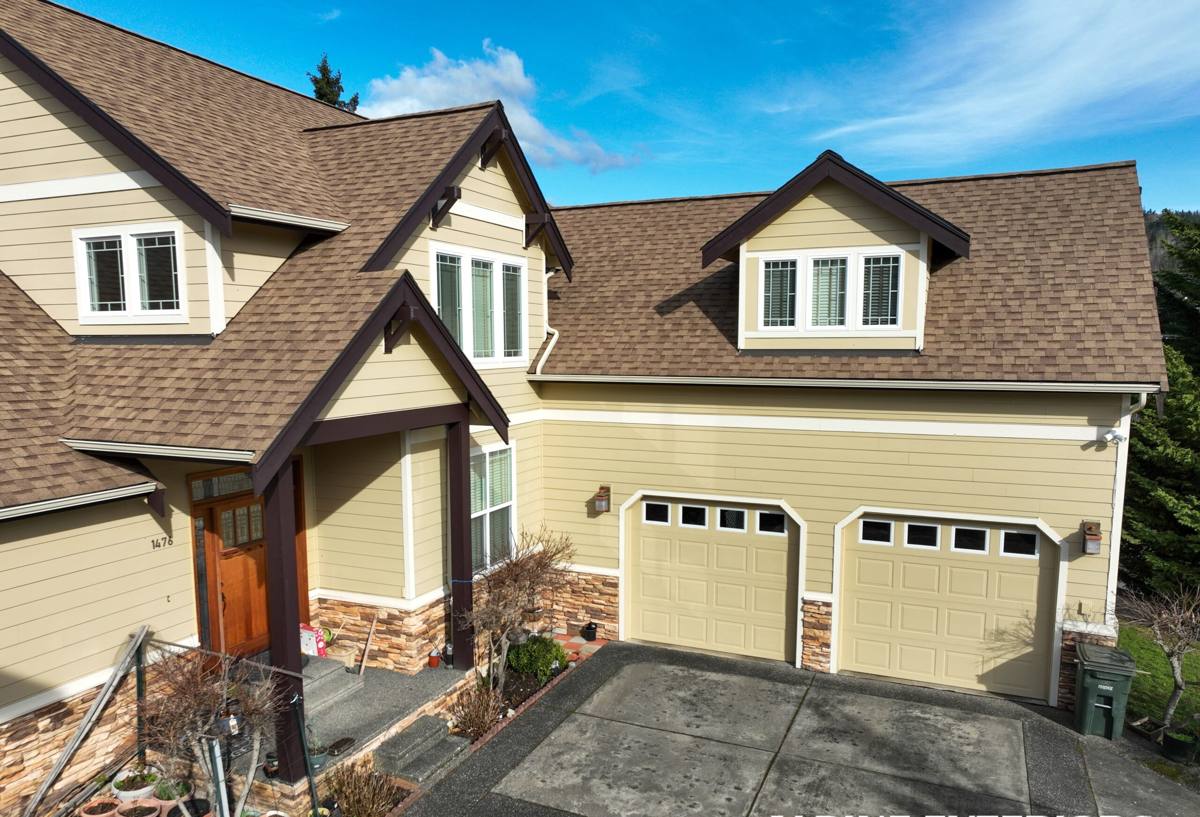
What "Correct" Metal Roofing Looks Like Here
Panel Profiles That Make Sense for This Climate
Exposed-fastener panels (the ribbed, corrugated-style panels sometimes called 5V or R-panel) are the least expensive way to put a metal roof on a house, and they can work fine on sheds, porches, or budget-conscious projects. But every exposed fastener is a small puncture through the panel, sealed with a rubber or neoprene washer. In direct coastal UV and salt exposure, those washers are the first thing to degrade — usually well before the metal itself shows any wear. Once a handful of washers fail, you get slow leaks that are hard to trace.
Standing seam panels solve this by hiding every fastener under a raised, mechanically or hydraulically seamed rib, so there's no exposed penetration for water or UV to attack. It costs more up front. For a home this close to the water, it's usually the difference between a roof you replace once and one you're patching every few years.
Metal Choice and Gauge
Steel panels (typically 24 or 26 gauge for residential work) are the most common choice and, with a proper coating, hold up well. Aluminum costs more but doesn't rust — it only forms a stable oxide layer — which makes it worth considering for homes with very heavy, direct salt spray exposure right along the waterfront. Thinner, lighter-gauge panels marketed at lower price points tend to oil-can (show visible waviness) and dent more easily in wind-blown debris, which matters in a storm-prone area.
Coatings That Actually Hold Up to Salt and UV
The paint system matters as much as the metal underneath it. PVDF coatings (sold under names like Kynar 500) resist chalking and fading far longer under intense Florida UV than the cheaper SMP (silicone-modified polyester) coatings used on entry-level panels. On an inland roof, that difference might take a decade to become visible. On a Cortez roof facing salt air and full sun most of the year, it shows up much sooner. We spec PVDF-class coatings for coastal jobs as a matter of standard practice, not an upsell.
Wind Resistance Isn't Optional in Manatee County
Cortez isn't in Florida's High-Velocity Hurricane Zone — that designation applies to Miami-Dade and Broward Counties. But Manatee County still enforces Florida Building Code wind-uplift requirements that are demanding for a coastal location, and a metal roof is only as wind-resistant as its weakest attachment point. That comes down to three things: the clip or fastener spacing specified for the panel's tested wind rating, the gauge and pull-out strength of the fasteners themselves, and whether the underlying deck is sound enough to actually hold them. A beautiful standing seam roof installed with the wrong clip spacing for its wind rating is a liability, not an upgrade. Permits and inspections exist precisely to catch that gap, and we pull permits and build to the tested assembly on every job — not the shortcut version.
Salt Air, Corrosion, and Mixed Metals
Salt air doesn't just attack the roof panel — it attacks anything metal it touches, and it attacks faster when two dissimilar metals are in contact with each other. This is called galvanic corrosion: a small electrical reaction between two different metals that accelerates rust and pitting at the point of contact, especially in a moist, salty environment. Common mistakes we see and correct on coastal jobs include:
- Steel screws driven into aluminum panels (or the reverse) without compatible coatings
- Copper flashing or vents set directly against steel or aluminum roofing
- Mixing panel brands or fastener systems that weren't engineered to work together
- Reusing old flashing or pipe boots that don't match the new metal's coating
None of this is complicated once you know to look for it — it's just easy to get wrong if the crew doing the install doesn't work in a salt-air environment regularly.
How We Approach a Cortez Metal Roof Install
1. Deck and Structure Inspection
Every job starts with a full tear-off and a look at the actual roof deck, not just the surface. Salt-humid air can quietly rot sheathing from underneath long before it's visible from inside the attic. Any soft or damaged decking gets replaced before a single panel goes down — metal roofing only performs as well as what it's fastened to.
2. Underlayment and Secondary Water Barrier
We install a self-adhered, high-temperature underlayment (not the older felt paper) as a secondary water barrier, with extra attention at eaves, valleys, and penetrations. In a wind-driven-rain environment, this layer is what protects the house if wind ever forces water past the panel seams themselves — it's cheap insurance for a roof that's otherwise built to shed water on its own.
3. Flashing and Penetrations
Flashing around chimneys, vents, skylights, and wall transitions is where most roof leaks actually originate, metal or otherwise. We custom-fit flashing to each penetration and material-match it to avoid the galvanic issues covered above.
4. Fastening to the Wind Rating
Clips or fasteners go in at the spacing required for the panel's tested wind-uplift rating for this location — not a generalized "standard" spacing that might be fine inland but isn't adequate a few blocks from the water.
5. Ventilation
Proper ridge and soffit ventilation keeps attic heat and moisture from building up under the panels, which protects both the roof deck and the coating on the underside of the metal.
6. Permit and Inspection
We pull the required Manatee County permit and build to pass inspection against the assembly we quoted — not a version that gets adjusted after the inspector leaves.
What Drives the Cost of a Metal Roof
Metal roofing costs more upfront than asphalt shingles — installed pricing typically runs in a broad range of roughly $9 to $16 per square foot depending on the factors below, though every roof is different and the only accurate number comes from an on-site look. What actually moves the price:
| Factor | Why It Matters | Typical Impact |
|---|---|---|
| Panel type | Standing seam (concealed fastener) vs. exposed-fastener panels | Standing seam costs more but lasts longer near salt air |
| Metal and gauge | Steel vs. aluminum; thicker gauge resists denting and oil-canning | Aluminum and heavier gauge cost more upfront |
| Coating quality | PVDF/Kynar resists UV fading and chalking far longer than SMP | Modest cost increase, significant longevity gain |
| Roof complexity | Valleys, dormers, multiple pitches, penetrations | More cuts, more flashing, more labor |
| Tear-off vs. overlay | Full tear-off allows deck inspection and repair | Adds cost but avoids hidden deck problems |
| Underlayment upgrade | Self-adhered secondary water barrier vs. basic felt | Small cost, meaningful storm protection |
Keeping a Metal Roof Performing Near the Water
A correctly installed metal roof is genuinely low-maintenance, but "low" isn't "none" — especially this close to the water. A short annual routine catches small issues before they become leaks:
- Rinse accumulated salt film off the roof periodically with fresh water, especially after long dry stretches
- Check sealant and flashing at every penetration (vents, chimneys, skylights) once a year
- Clear leaves, palm fronds, and debris from valleys and gutters so water doesn't pool
- Look for any scratches or scuffs in the coating from storm debris — exposed bare metal at a scratch is where corrosion starts
- Do a visual check after any major storm, even if nothing looks obviously wrong from the ground
Why a Crew That Already Works Cortez Matters
A roofing crew that mostly works subdivisions ten or fifteen miles inland isn't wrong about roofing in general — they're just calibrated for a different environment. Fastener choices, coating specs, flashing details, and even how tight to build in ventilation all shift once salt air and direct waterfront wind exposure enter the picture. A crew that regularly works Cortez and the surrounding Bradenton waterfront has already made the adjustments — and the mistakes — that come with learning that the hard way, so your roof doesn't have to be the one they learn on.
There's also the practical side: familiarity with how Manatee County permitting and inspection actually runs, comfort working on the older homes and cottages mixed in with newer construction that you'll find in and around Cortez, and the ability to respond quickly if a storm does damage in the area rather than being backed up with jobs across the county.
If you're weighing a metal roof for a home in or near Cortez, we're happy to take a look and walk through what your specific roof actually needs — no pressure, no upsell script. Use the form below to request a free estimate and we'll get back to you with a straight answer.