 Bradenton
 Why Braden River Homes Take a Beating
Homes along and near the Braden River sit in one of the more demanding climate zones in the country for exterior building materials. Manatee County summers bring months of intense, direct UV exposure that breaks down paint films and cheaper composite sidings from the outside in. Add wind-driven rain during tropical storms and hurricane season, salt-laden air moving in off the Gulf and Tampa Bay, and the humidity that never really lets up, and you have an environment that finds every weak point in a siding system within a few years, not a few decades.
We see the same failure patterns over and over on Braden River homes: caulk joints that gave up early, paint that chalked and faded within five or six years, panel seams that let water behind the cladding, and trim that soaked up moisture and started to swell or rot. None of that is a homeowner mistake — it's what happens when a siding product not engineered for this climate gets installed in it anyway. That's the reason we install James Hardie fiber cement exclusively, and it's the entire focus of this page: what a correct James Hardie job looks like on a Braden River home, and why it holds up where other materials don't.
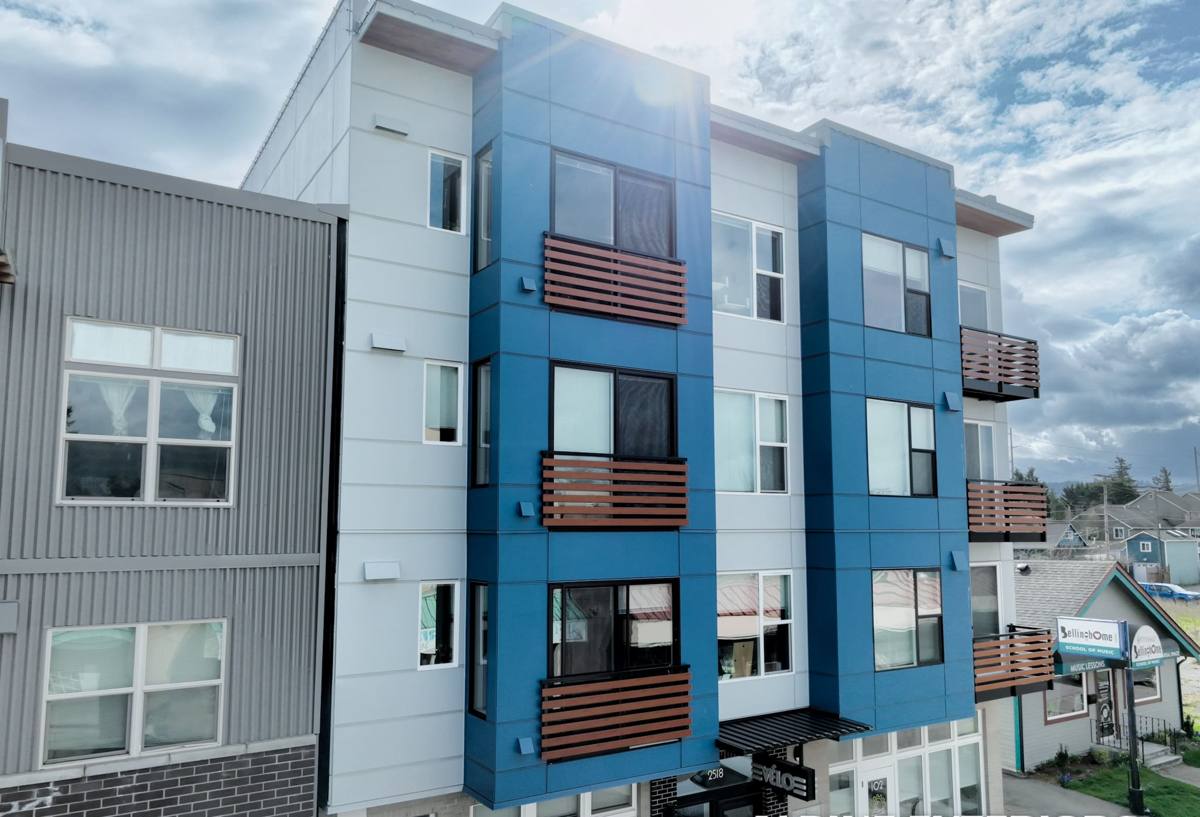
What James Hardie Siding Actually Delivers Here
James Hardie fiber cement is a blend of cement, sand, and cellulose fibers, cured into a rigid board that doesn't behave like wood, vinyl, or wood-composite products in a coastal Florida climate. A few of the reasons it holds up on Braden River properties:
- Non-combustible — fiber cement doesn't feed a fire the way wood-based or vinyl sidings can, which matters for insurance underwriting as much as safety.
- Dimensionally stable — it doesn't expand, contract, warp, or buckle with heat and humidity swings the way vinyl and engineered wood products do.
- Built for moisture — Hardie's HZ5 product line is specifically formulated for humid, high-moisture Gulf Coast conditions, resisting the swelling and softening that plagues wood-based sidings here.
- Factory-cured ColorPlus finish — the color is baked on in a controlled factory process, not field-applied paint, so it resists the UV fade and chalking that hits site-painted siding within a few Florida summers.
None of this is marketing language — it's the reason fiber cement has become the standard specification for coastal and hurricane-prone construction across Florida, and why we won't put anything else on a Braden River home.
Wind, Rain, and Salt: What Correct Engineering Looks Like
Wind resistance
Manatee County sits well within hurricane wind zones, and James Hardie siding carries engineered wind ratings that hold up to those design loads — but only when the fastening schedule, nailing pattern, and edge clearances match Hardie's published installation requirements for the local wind zone. A crew that skips the correct nail spacing to save time isn't installing "James Hardie siding that happens to be a little faster" — they're installing a system that no longer meets its rated wind performance, regardless of what product is on the wall.
Wind-driven rain
Hurricanes and summer storms in this area don't just drop rain straight down — they drive it sideways, under laps, around trim, and into any gap that exists. Correct Hardie installation relies on proper overlap, flashing at every horizontal joint and penetration, and a water-resistive barrier behind the siding that's lapped correctly from the bottom up. Get any one of those wrong and the siding itself can be flawless while water still finds its way into the wall assembly.
Salt air and corrosion
Homes closer to the river and open water deal with salt-laden air that accelerates corrosion on fasteners and trim hardware. We use fasteners and flashing rated for coastal exposure, not standard interior-grade hardware, because the wrong fastener corroding inside the wall assembly is a slow, invisible problem that shows up as staining and failure years later.
Choosing the Right Hardie Product Line
James Hardie makes several distinct siding profiles, and the right choice depends on the home's style and exposure, not just personal preference:
| Product | Best For | Why It Fits Braden River Homes |
|---|---|---|
| HardiePlank lap siding | Traditional and ranch-style homes | The most common profile in the area; wide range of textures and reveal widths to match existing neighborhood character |
| HardiePanel vertical siding | Gable accents, modern or Florida-vernacular design | Clean vertical lines that pair well with board-and-batten accents on newer construction |
| HardieShingle siding | Accent areas, gables, dormers | Adds texture and curb appeal without switching to a different material system |
| HardieTrim boards | Corners, window and door surrounds, fascia | Matches the fiber cement performance of the field siding instead of mixing in wood trim that rots at a different rate |
Every one of these should be specified in Hardie's HZ5 formulation for this climate zone, finished in factory-applied ColorPlus rather than field-painted, wherever the product line offers it.
What a Correct Installation Involves
Fiber cement siding is only as good as the installation behind it. The material itself is excellent; the failures we get called out to fix on other contractors' work are almost always installation errors, not product defects. A correct job on a Braden River home includes:
- A properly lapped water-resistive barrier installed before any siding goes up, not patched around existing gaps
- Flashing at every window head, door head, and horizontal trim intersection
- Manufacturer-specified nailing pattern and fastener type, matched to the local wind zone rather than a generic schedule
- Correct minimum clearance between the bottom of the siding and roofing, decks, and grade to prevent wicking moisture
- Butt joints back-flashed or sealed per Hardie's specification, not just caulked and left
- Field-cut edges sealed with a Hardie-approved product before installation, since raw cut edges are the most common point of moisture intrusion
- Correct fastener depth — overdriven or underdriven nails both compromise wind performance and can void the warranty
Skip any one of these steps and you can end up with siding that looks correct for a year or two before problems start showing up at seams, corners, and penetrations.
Our Process, Start to Finish
1. On-site assessment
We walk the entire exterior, check the current siding and any water-damaged sheathing or trim, and look at drainage, roofline details, and sun/wind exposure specific to the home's position relative to the river and open water.
2. Product and color selection
We help homeowners pick the right Hardie profile and ColorPlus color, factoring in HOA guidelines where they apply and the practical realities of UV exposure on different color depths.
3. Prep and moisture barrier
Old siding comes off, damaged sheathing is identified and replaced, and a new water-resistive barrier goes on correctly lapped before a single piece of Hardie goes up.
4. Installation to spec
Siding, trim, and flashing go in following Hardie's published fastening and clearance requirements for this wind zone — not a generalized nailing pattern used everywhere regardless of local code.
5. Final inspection and walkthrough
We check seams, fastener lines, caulking, and clearances before calling the job finished, and walk the homeowner through what maintenance (if any) is actually needed going forward.
What Drives the Cost of a Job Like This
| Factor | Why It Matters |
|---|---|
| Amount of sheathing repair needed | Homes with prior moisture intrusion often need rotted sheathing replaced before new siding goes on — this isn't optional and isn't always visible until old siding comes off |
| Product line and profile | HardiePlank, panel, and shingle siding carry different material and labor costs; trim and accent details add time |
| Home size and complexity | Roofline height, number of gables, dormers, and trim details all affect labor hours |
| Color and finish | Factory ColorPlus finishes cost more upfront than field-priming but eliminate a repaint cycle for years |
| Site access | Waterfront and canal-adjacent lots can complicate staging and equipment access, which affects labor time |
We give straightforward, itemized estimates so homeowners understand exactly what they're paying for and why — not a flat number with no breakdown.
Why a Crew That Already Works This Area Matters
A siding crew that regularly works homes near the Braden River already knows the local wind zone requirements, the moisture patterns that show up on riverfront and canal-adjacent lots, and the trim details common to both the area's older established homes and its newer construction. That familiarity shows up in the details — correct clearances above grade and roofing, flashing details that account for wind-driven rain direction, and fastener choices that hold up to salt air rather than corroding early. A crew installing James Hardie for the first time in this climate is learning those lessons on your house. We'd rather you not be the one who pays for that education.
Maintenance: What Homeowners Actually Need to Do
One of the practical advantages of James Hardie with a factory ColorPlus finish is how little ongoing maintenance it needs compared to wood, vinyl, or field-painted siding. Realistic upkeep looks like:
- Rinsing the siding periodically to clear salt residue and airborne debris, especially on homes closer to open water
- Inspecting caulk joints at trim and penetrations annually and re-caulking if it's cracked or pulling away
- Keeping irrigation heads and sprinklers from spraying directly on the siding, which can cause mineral staining over time
- Trimming vegetation back from the siding to maintain airflow and prevent trapped moisture
That's a short, manageable list — a fraction of what wood or vinyl siding typically demands in this climate.
Ready to Talk About Your Home
If you're weighing a siding replacement for a Braden River property, we're happy to walk the exterior with you, point out anything we see, and put together a clear, itemized estimate — no pressure, no obligation. Use the form below to get started.