 Bradenton
 Why Siding Choice Matters More in Bayshore Gardens Than Most Places
Bayshore Gardens sits close enough to Sarasota Bay and the Gulf that its homes take on a specific combination of punishment: salt-laden air moving in off the water, intense UV exposure nearly every day of the year, wind-driven rain during summer storms, and the real possibility of hurricane-force gusts during the season. No single one of those factors is unusual for a Manatee County neighborhood. It's the combination, applied year after year, that separates siding that looks good for a decade from siding that looks good for three decades.
That's the lens we use on every fiber cement siding project we take on in this neighborhood. The right product, installed the right way, is what stands between a home and that combination of weather. Get either piece wrong and the siding becomes a maintenance problem long before it should.
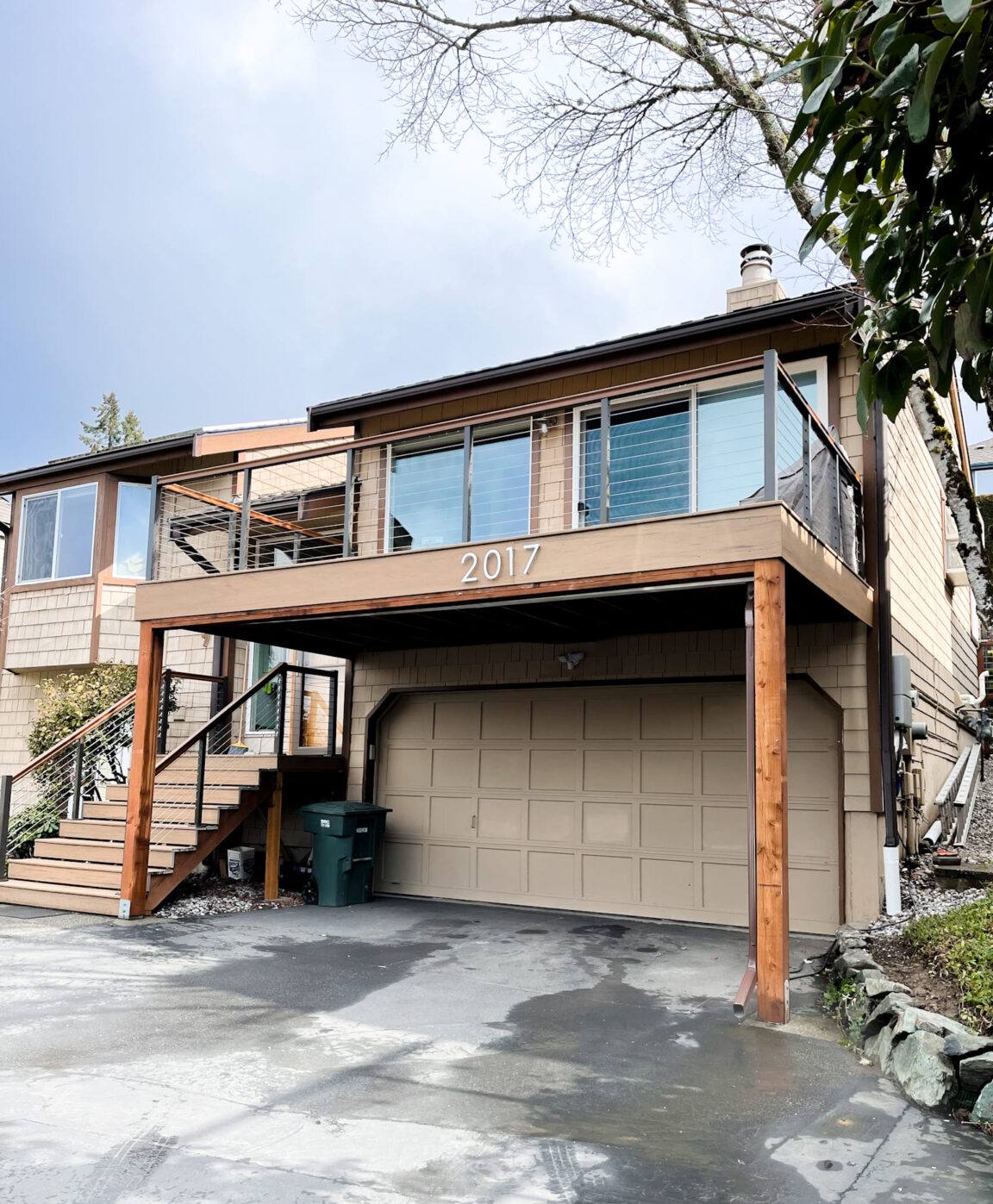
What Bayshore Gardens Homes Actually Need From Their Siding
Wind and Windborne Debris
Bradenton falls within Florida's high-velocity wind zones, and siding on an exposed wall needs to stay fastened and intact through sustained gusts, not just survive a light breeze. Fastener pattern, panel overlap, and edge attachment all matter more here than in a low-wind inland market.
Moisture That Doesn't Quit
Between afternoon thunderstorms, high humidity, and wind-driven rain that gets pushed sideways into wall assemblies, siding on the Gulf Coast deals with moisture exposure on a near-constant basis. A material that absorbs water, swells, or delaminates under that pressure is going to show it within a few seasons, not a few decades.
UV and Heat
Florida sun is relentless, and it's hardest on paint film and pigment. Siding that fades, chalks, or bleaches unevenly doesn't just look tired — it's also usually a sign the protective coating is breaking down, which opens the door to further moisture and UV damage underneath.
Salt Air Corrosion
Proximity to the bay and Gulf means airborne salt settles on exterior surfaces and accelerates corrosion of anything metal — fasteners, flashing, trim. Siding systems and installation hardware both need to be selected with that in mind, not treated as an afterthought.
Why We Install Only James Hardie Fiber Cement Siding
We don't install vinyl, LP SmartSide, Cemplank, Allura, or bare wood siding, and that's a deliberate standard, not a limitation of what we're capable of installing. Each of those products has legitimate uses elsewhere. On the Gulf Coast, in a climate like Bradenton's, they carry trade-offs we're not willing to put our name behind.
- Vinyl can warp, buckle, or crack in extreme heat and high wind, and it doesn't hold up well to prolonged UV exposure without fading.
- Engineered wood products like LP SmartSide use wood strand cores that are vulnerable to moisture intrusion at cut edges and fastener penetrations — a real concern in a climate this wet.
- Other fiber cement brands (Cemplank, Allura) compete on price but don't carry the same factory finish system, product engineering for coastal climates, or transferable warranty structure that James Hardie backs its products with.
- Bare or primed wood siding requires a level of ongoing maintenance — repainting, caulking, moisture monitoring — that most homeowners don't want to sign up for in a climate this demanding.
James Hardie fiber cement is non-combustible, engineered specifically for high-moisture and coastal climates, and finished with a factory-applied ColorPlus coating that's baked on under controlled conditions rather than field-painted. That combination is why it's the only product we put on homes in Bayshore Gardens and the rest of our Bradenton service area.
Fiber Cement vs. Other Siding Materials for This Climate
| Material | Wind & Impact Resistance | Moisture Behavior | UV / Color Retention | Typical Maintenance |
|---|---|---|---|---|
| James Hardie Fiber Cement | Engineered for high-wind zones when installed to spec | Non-combustible, resists moisture-driven swelling | Factory ColorPlus finish resists fading | Occasional rinse; repainting not required for years |
| Vinyl | Can warp or crack under heat and wind stress | Doesn't absorb water, but seams can allow intrusion | Fades and chalks with prolonged sun exposure | Low, but replacement panels can be hard to color-match later |
| Engineered Wood (LP SmartSide) | Reasonable impact resistance | Wood-strand core vulnerable at cut edges and fasteners | Requires field-applied finish maintenance | Regular inspection of seams and caulk joints |
| Cedar / Untreated Wood | Moderate, depends on installation | Absorbs moisture; prone to rot without upkeep | Fades and grays without refinishing | High — periodic staining, sealing, and repair |
What a Correct Fiber Cement Installation Involves
The product is only half the equation. Fiber cement siding fails prematurely almost exclusively because of installation shortcuts, not because the material itself gave out. A correct job includes:
Proper Water Management Behind the Siding
A weather-resistant barrier and correctly lapped flashing at every window, door, and penetration point come before a single piece of siding goes up. This is the layer that actually keeps wind-driven rain out of the wall assembly — the siding itself is the second line of defense, not the only one.
Fastening to Manufacturer and Wind-Zone Spec
Fastener type, spacing, and embedment depth all need to match both the Hardie installation manual and the wind zone the home sits in. Under-fastened siding is one of the most common causes of panels coming loose or failing in a storm.
Correct Clearances and Joint Treatment
Siding needs proper clearance from grade, roof lines, and other transitions to avoid trapping moisture against the bottom edge of the panel. Butt joints and trim intersections need to be caulked or flashed correctly — gaps here are where water finds its way in over time.
Painting and Field-Cut Edge Sealing
Even with a factory-applied ColorPlus finish, any field-cut edge needs to be sealed per manufacturer specification. Skipping this step is a common shortcut that leads to localized moisture absorption at cut ends years down the road.
Our Process for Bayshore Gardens Projects
Every project starts with an on-site assessment of the existing siding, sheathing condition, and any problem areas around windows, doors, and roof transitions — issues that are common on homes that have been through multiple storm seasons without a full siding replacement. From there:
- We remove the existing siding and inspect the sheathing underneath, addressing any moisture damage before covering it back up.
- We install a new weather-resistant barrier and properly lapped flashing at every penetration.
- We install James Hardie panels or lap siding fastened to the wind-zone specification for this part of Manatee County.
- We seal and finish all field-cut edges, trim, and joints.
- We walk the finished job with the homeowner before calling it complete.
We don't skip steps to save time, and we don't sub out the flashing and water management details that don't show up in a final walkthrough but determine how the siding performs five and ten years from now.
Maintenance and Longevity in a Gulf Coast Climate
One of the practical advantages of James Hardie fiber cement in a climate like Bradenton's is how little ongoing maintenance it asks for compared to wood-based alternatives. It doesn't need periodic repainting to stay protected, it doesn't absorb water the way wood-strand products can, and the factory finish is engineered to hold color under sustained UV exposure. That said, no siding is entirely maintenance-free here:
- Rinse siding periodically to remove salt residue and airborne grime, especially on homes closer to the water.
- Keep an eye on caulk joints around windows, doors, and trim, and have them refreshed if they start to crack or pull away.
- After major storms, walk the exterior and look for loose panels, damaged trim, or debris impact — catching it early is cheaper than letting it sit.
- Keep irrigation and sprinklers from spraying directly on siding long-term, which can leave mineral staining over time.
Why Hiring a Crew That Already Works This Area Matters
Fiber cement installation isn't complicated in concept, but it's unforgiving of shortcuts, and a crew that's used to installing in a different climate or wind zone doesn't automatically know Bradenton's requirements. A contractor who already works in Bayshore Gardens and the surrounding Bradenton area brings a few practical advantages:
- Familiarity with the housing stock common to this part of Manatee County and the issues that tend to show up on homes of that age and construction type.
- Working knowledge of local permitting and wind-zone requirements without treating it as a research project mid-job.
- An understanding of how salt air, humidity, and storm exposure specifically affect installation details like fastener choice and flashing.
- Accountability — a crew that plans to keep working in this neighborhood has a reason to get the details right the first time.
If you're weighing a siding replacement in Bayshore Gardens, we're glad to come take a look, walk you through what your home specifically needs, and give you a straightforward, no-pressure estimate. Fill out the form below and we'll follow up to schedule a time.