 Bradenton
 Building Decks for Bayshore Gardens' Climate Reality
Bayshore Gardens sits in Manatee County just outside Bradenton, and much of the neighborhood is close enough to open water that salt air, humidity, and storm exposure shape almost every outdoor building decision here. A deck design that holds up fine in a drier, inland climate can start showing problems within a couple of seasons in this area if it wasn't built with Gulf Coast conditions in mind from the start. We build decks specifically for what this part of Manatee County deals with year after year: hurricane-force wind gusts, sun exposure that runs nearly twelve months a year, wind-driven rain that finds every gap in flashing and fasteners, and salt-laden air that accelerates corrosion on anything but the right hardware.
That combination is why a generic deck build isn't good enough here. The framing, fasteners, footings, and decking material all need to be selected and installed with this specific environment in mind — not just to pass inspection, but to still be structurally sound and safe to walk on a decade from now.
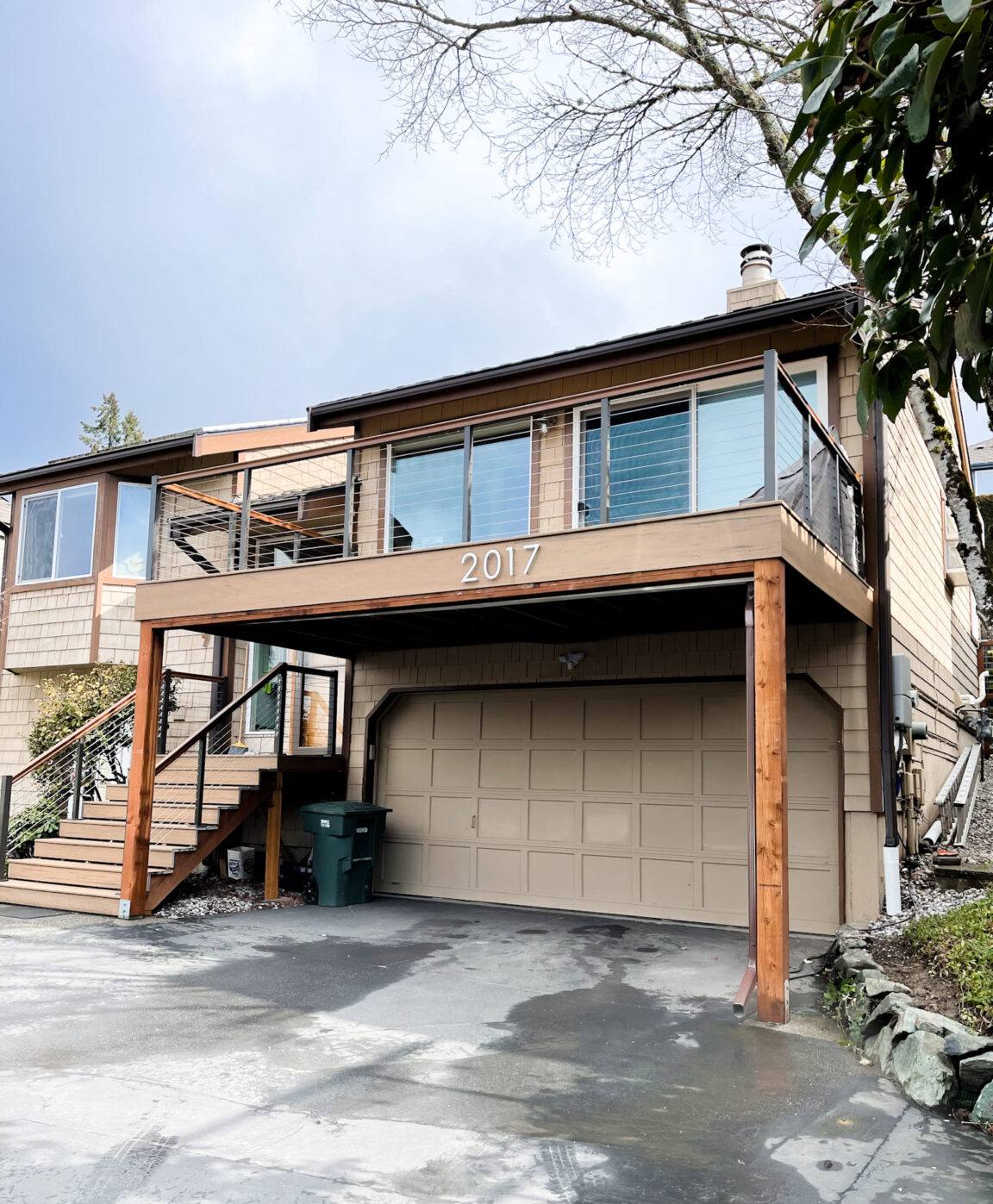
What This Climate Actually Does to a Deck
Wind Load
Bradenton and the surrounding Manatee County coastline sit in a wind zone where deck framing has to be engineered to resist uplift, not just support weight. Ledger connections, post bases, and joist hangers all take real load during a tropical storm or hurricane, and undersized or improperly fastened connections are one of the most common reasons decks fail during high wind — usually at the point where the deck meets the house.
UV Exposure
Florida sun breaks down wood fibers, dries out natural oils, and fades or chalks lower-grade composite decking faster than most homeowners expect. Surfaces that face west or get full sun most of the day age noticeably faster than shaded areas of the same deck, which is why material choice and finish matter as much as framing.
Wind-Driven Rain and Humidity
Rain in this region rarely falls straight down. Wind pushes it sideways and underneath ledger boards, railing posts, and stair stringers, where it can sit against wood or fasteners long after the surface looks dry. Combined with Gulf Coast humidity, this is what drives rot at connection points long before the visible decking shows any wear.
Salt Air
For homes closer to the water — which describes a good portion of Bayshore Gardens — airborne salt accelerates corrosion on fasteners, joist hangers, and railing hardware. Standard galvanized hardware can start showing rust and pitting well ahead of schedule in this environment, which is a maintenance and safety issue, not just a cosmetic one.
Decking Material Options for This Neighborhood
There's no single "best" decking material — there's a best material for a given budget, sun exposure, and how much upkeep a homeowner actually wants to do. Here's how the common options compare specifically for a salt-air, high-UV coastal environment like Bayshore Gardens.
| Material | Upfront Cost | Maintenance | Heat Underfoot | Coastal Durability |
|---|---|---|---|---|
| Pressure-treated pine | Lowest | Regular sealing/staining needed | Moderate | Fair — needs consistent upkeep near salt air |
| Tropical hardwood (e.g. ipe) | Highest | Periodic oiling to maintain color | Lower than composite | Very good when properly maintained |
| Capped composite | Mid-high | Low — occasional washing | Can run hot in full sun | Very good — resists moisture and salt |
| PVC / cellular decking | Highest | Lowest — no sealing ever needed | Runs hottest of the group | Excellent — fully moisture-proof board |
Pressure-treated wood is still a reasonable choice for homeowners on a budget who don't mind staying on top of maintenance, but it's the material that punishes neglect the fastest in this climate. Capped composite and PVC cost more up front but shed water and resist salt-driven decay without ongoing sealing — which matters if the deck isn't going to get attention every season.
What a Correctly Built Deck Involves Structurally
Ledger Attachment and Flashing
Where the deck ties into the house is the single most important structural detail on the entire project. It has to be properly flashed to keep wind-driven rain from working its way behind the ledger board and into the house's rim joist, and it has to be through-bolted or lag-screwed into solid framing — not just nailed. This connection also carries a large share of the deck's wind load.
Footings for Florida Soil
Much of Manatee County has sandy soil with a high water table, which changes how footings need to be sized and set compared to firmer inland soils. Footings that are too shallow or undersized for local soil conditions can shift over time, leading to a deck that feels bouncy or slightly out of level within a few years.
Fasteners and Hardware
In a salt-air environment, hardware grade is not a place to cut corners. Stainless steel or coated fasteners rated for coastal exposure cost more than standard galvanized hardware, but they're the difference between hardware that's still solid in ten years and hardware that's rusting and weakening within three or four.
Railings and Stairs
Railings need to meet current code height and baluster spacing requirements, and stair stringers need to be sized for the actual rise and run of the site — not a generic template. These are also the components most exposed to wind-driven rain, so hardware choice matters as much here as anywhere else on the structure.
Permitting in Manatee County
Most new deck construction in Manatee County — including in Bayshore Gardens — requires a building permit and inspection, since the structure has to meet current wind load and life-safety requirements. This isn't paperwork for its own sake: it's the mechanism that catches undersized footings, missing flashing, or under-fastened ledger connections before they become expensive problems. A contractor who pulls permits and schedules inspections as a matter of course is telling you something about how they build even when no one's checking.
Our Process for a Bayshore Gardens Deck Project
1. On-Site Assessment
We look at sun exposure, drainage, soil conditions, proximity to water, and how the deck will tie into the existing structure before recommending a material or layout. A deck design that works well two streets over might not be the right call for a lot with different drainage or sun exposure.
2. Material and Design Walkthrough
We walk homeowners through the honest trade-offs between materials — cost, maintenance, heat underfoot, and expected coastal durability — rather than pushing one product. The table above reflects the same conversation we have on site.
3. Permitting
We handle the permit application and schedule the required inspections with Manatee County so the homeowner isn't managing that process themselves.
4. Build
Framing, flashing, footings, and fastener selection are all handled to the standard this climate requires, not the minimum the code allows. We treat the ledger connection and footing work as the parts of the job that matter most, even though they're the least visible once the deck is finished.
5. Final Walkthrough
Before we consider a project done, we walk the finished deck with the homeowner, cover basic maintenance expectations for the material chosen, and make sure every rail, stair, and board is solid.
Maintaining a Deck in a Salt Air, High-UV Environment
Even low-maintenance materials benefit from a basic seasonal routine in this climate. A little attention twice a year catches small issues before they turn into structural ones.
- Rinse off salt residue and debris every few weeks, especially on decks closer to the water
- Check railing posts and stair connections for movement or rust staining at least twice a year
- Reseal or oil wood decking on the schedule the material calls for — don't wait until it looks dry and gray
- Clear leaves and organic debris from between boards so moisture doesn't sit trapped against the wood
- Inspect fasteners and hardware for rust or pitting, particularly after hurricane season
- Confirm the ledger flashing is intact and hasn't been disturbed by storm winds
Common Problems We See on Older Decks in This Area
Several issues show up repeatedly on aging decks in and around Bayshore Gardens, almost all tracing back to the same root causes: under-rated hardware, missing or failed flashing, and materials that weren't suited to this much sun and salt exposure in the first place. Soft or spongy spots near the ledger usually mean water has been getting behind the flashing for a while. Rust streaks around fasteners point to hardware that wasn't rated for coastal exposure. And decking that's cracked, faded, or splintering well ahead of its expected lifespan is often a sign the wrong material was chosen for how much direct sun that section of the yard actually gets.
Cost Factors for a Bayshore Gardens Deck
| Factor | Why It Changes the Price |
|---|---|
| Decking material | Pressure-treated wood costs less upfront than composite or PVC; hardwood runs highest |
| Size and height | Larger decks and elevated decks require more framing, footings, and stair structure |
| Hardware grade | Coastal-rated stainless or coated fasteners cost more than standard galvanized hardware |
| Site conditions | Sandy or low-lying soil may need deeper or additional footings |
| Railings and stairs | Custom rail designs and multiple stair sections add labor and material |
| Permitting complexity | Elevated or larger structures may require additional engineering documentation |
Because of these variables, we don't quote deck projects over the phone — an accurate number comes from seeing the site, understanding the material preference, and knowing what the connection to the house actually requires.
Why a Crew That Already Works in Bayshore Gardens Matters
Building decks in this neighborhood repeatedly means we already have a working sense of the soil conditions, the typical sun exposure by lot orientation, and what Manatee County inspectors look for on a permit review — before we ever step on site. That familiarity shows up in fewer surprises during the build and fewer callbacks after a storm, because the framing, flashing, and hardware decisions were made for this exact environment the first time, not adjusted after something failed.
If you're planning a new deck or replacing one that's showing its age, we're happy to take a look and put together a free, no-pressure estimate — just fill out the form below and we'll go from there.